
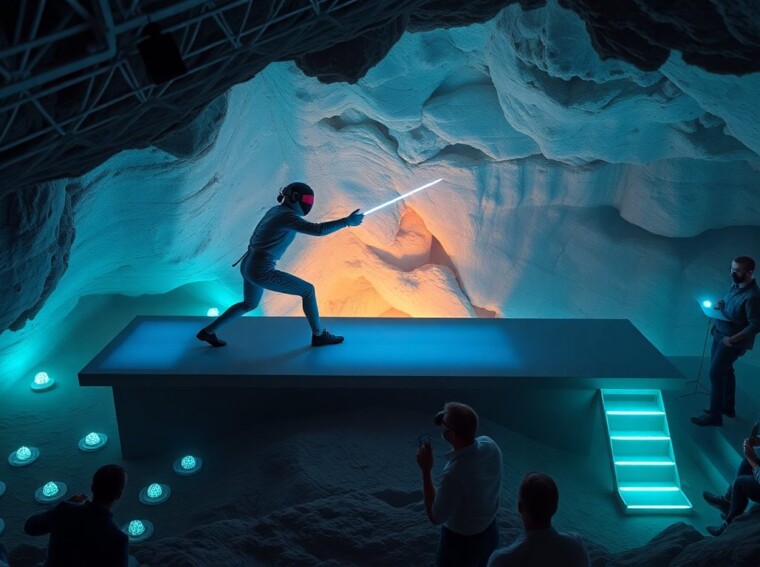
Pmrld invisible balloon wars in titanium castle ruins bring live esports into underground settings. The series uses light-driven targets, real-time motion captures, and strict safety rules. The events mix athletic fencing moves with digital overlays. The events aim to attract fans who want novel competitive shows. The organizers stage short, intense bouts that fit broadcast windows and venue constraints.
Key Takeaways
- Plmwrld spectral fencing matches blend physical fencing with augmented visuals beneath bioluminescent caves, creating unique underground esports experiences.
- The events prioritize environmental protection by limiting crowd size, using biodegradable gear, and carefully managing cave microclimates and lighting.
- Gameplay features short, intense bouts with advanced spectral tech for real-time scoring and stunning visual effects that enhance viewer immersion.
- Strict safety protocols for players and fans include controlled lighting, air quality monitoring, and coordinated emergency preparedness.
- Plmwrld’s innovative approach balances sporting integrity, environmental conservation, and engaging broadcast formats to attract diverse esports audiences.
What Spectral Fencing Is And How Plmwrld Stages Cave Matches
Plmwrld spectral fencing matches beneath bioluminescent caves combine physical fencing and augmented visuals. The company runs events inside mapped caverns with native bioluminescent flora. Plmwrld limits crowd size to protect the cave ecology. The staff uses modular platforms to set up pistes above fragile formations. The production team treats each cave as a controlled stage. The team maps power, ventilation, and emergency egress before any match.
Plmwrld hires local scientists to measure light and humidity. The crew selects sites with stable microclimates. The organizers bring portable power with battery backups. They route cabling on raised trays to avoid touching surfaces. The company trains staff to work in low-light conditions. The referees adapt standard fencing signals to suit digital overlays and glow markers.
Plmwrld applies strict environmental rules. The organizers ban consumables that can leak. The crew uses biodegradable gear when possible. The production team times events to minimize human presence inside the cave. The events run short match blocks and long recovery periods to let the cave equilibrate. The brand presents the matches as sport and science combined. Fans attend in small groups to reduce noise and disturbance.
Gameplay, Rules, And Spectral Tech Used Beneath The Bioluminescent Caverns
Plmwrld designs gameplay to suit tight, uneven spaces. The matches use three-minute bouts and best-of-five cards to keep momentum. Players score with conductive tips that register contact on layered sensors. The system records hits when both the sensor and a spectral marker align. The referees verify points with a secondary camera feed. The format shortens exchange resets and keeps energy high.
Plmwrld sets clear gear rules. Players wear lightweight armor with integrated sensors. The suits use inert materials to avoid chemical release. The blades carry passive markers for optical tracking. The event applies modified right-of-way rules to fit overlay latency. The rules prioritize player safety and fair scoring rather than strict traditional codes. The match flow favors quick action and clear broadcast moments.
Plmwrld uses spectral tech to enhance visuals. The production layers bioluminescent effects with LED tracers and projection mapping. The system syncs sensor outputs to display software to show strike paths and hit confirmations. The tech team tunes color palettes to avoid overwhelming the cave organisms. The event balances visual drama and animal welfare.
Major broadcasters adjusted their 2026 commentary plans for new event types, and networks expanded personnel to cover hybrid sports events, as shown in the World Cup 2026 lineup. Plmwrld works with production partners to format feeds for different platforms. The company delivers a live main feed and multiple player cams for online viewers. The feeds include haptic data and shot telemetry for second-screen apps.
Lighting, Safety, And Audience Immersion In Subterranean Arenas
Plmwrld controls lighting to protect cave life and to create show contrast. The crew places low-intensity LEDs along the piste. The team uses narrow-beam projectors for player highlights. The lighting rigs run on battery arrays and smart dimmers. The staff tests each setup before public entry.
Plmwrld enforces safety measures for players and fans. The staff runs oxygen checks and monitors air quality. Medics station portable oxygen and evacuation litters near exits. The crew marks walkways with glow tape to guide attendees. The company issues strict footwear rules to prevent slips. Staff restricts touching of cave formations and directs all movement on raised walkways.
Plmwrld designs audience immersion to fit small groups. The organizers place seating on stepped platforms that keep distance from cave walls. The production uses binaural audio and low-latency commentary to make viewers feel present. The team offers tactile elements in companion apps that vibrate on hits. The apps also show simplified telemetry and replay clips.
Plmwrld trains staff for emergency scenarios. The company runs drills that simulate smoke, power loss, and player injury. The crew coordinates with local rescue teams for rapid response. The organizers limit daily shows to reduce strain on staff and environment. The company documents each event and publishes post-event impact reports to maintain transparency.
Plmwrld plans to expand cautiously. The company studies each new site for at least six months. The events aim to keep sporting integrity, protect cave systems, and deliver new viewing formats. The model balances show design with conservation and fan experience.