
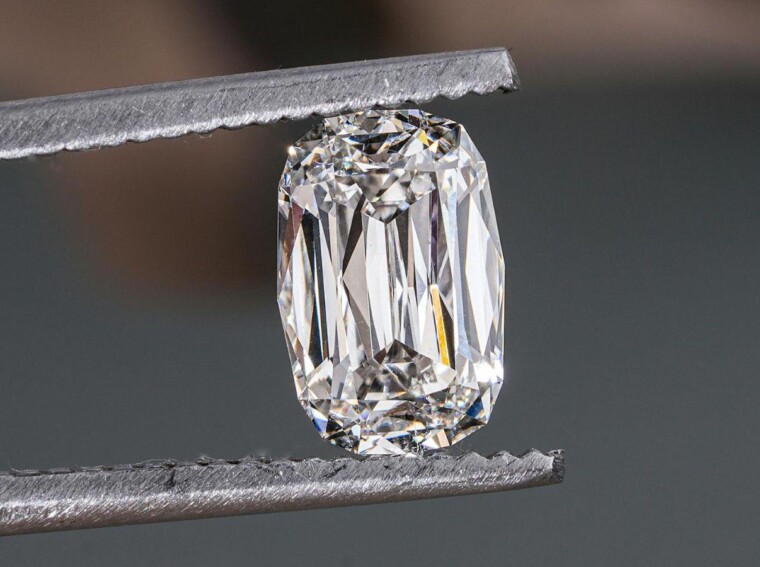
I spent about four months last year helping my friend Dan shop for a ring for his girlfriend Priya. What surprised me most was how badly the average jewellery store explains what it sells. Sales associates would hand us a loupe, mumble something about clarity, and steer us toward whatever had the highest margin. When we started asking about lab-grown stones specifically, things got worse. Half the staff didn’t know the difference between HPHT and CVD growth methods. The other half clearly did and tried to talk us out of it.
One shop on West 47th in the diamond district, I won’t name it but it’s the one with the gold-lettered awning, literally told us lab stones “lose their sparkle after a few years.” That is not a thing. Diamonds don’t do that. We left.
Lab diamonds have been commercially viable for jewelry since around 2015, and prices have dropped roughly 70 to 80 percent since 2020 according to Paul Zimnisky’s tracking. That collapse is real, and it has changed what a good buying experience should look like. If you walk into a shop in 2024 and the staff is still talking about lab stones like they’re a novelty or a downgrade, walk out.
The certification question is not optional
Every diamond worth buying, mined or grown, should come with a grading report from an independent lab. GIA started grading lab-grown stones on the same D-to-Z color scale and the same clarity scale as mined diamonds in 2020. Before that, lab reports used vaguer language like “colorless” instead of letter grades.
IGI grades most lab-grown diamonds on the market right now. Their reports are fine, but they tend to grade slightly more generously than GIA. A stone graded VS1 by IGI might come back as VS2 from GIA. This is not a conspiracy, it’s calibration drift. If you’re comparing two stones across two labs, you’re not really comparing them.
A good retailer will tell you this without being asked. A bad one will wave the certificate and assume you can’t read it.
Ask to see the actual report, not a summary. Look at the proportions diagram. Check whether the stone has been graded for cut quality, because some lab reports skip cut grading entirely on fancy shapes, and cut is the single biggest driver of how a diamond actually looks on a finger.
Origin and growth method matter more than the marketing suggests
There are two main ways to grow a diamond. High Pressure High Temperature recreates the conditions deep in the earth using a metal flux. Chemical Vapor Deposition grows the crystal layer by layer from a carbon-rich gas in a vacuum chamber. CVD stones often need post-growth HPHT treatment to improve color, which is fine but worth knowing.
Most retailers will not volunteer the growth method. Some genuinely don’t know. A few of the better operations are starting to track the energy source used during production, because growing a diamond eats a lot of electricity and the carbon footprint varies wildly depending on whether the facility runs on coal or hydroelectric power. SCS Global Services has been certifying some producers as verified zero-emission, which is a real distinction and not just a marketing line.
If sustainability is part of why you’re choosing a lab diamond, press on this. “Eco-friendly” with no documentation behind it means nothing.
Pricing should feel boring, not theatrical
When lab diamonds for sale are priced honestly, the math is straightforward. You can pull wholesale price sheets for lab-grown polished, compare against the retailer’s markup, and see whether you’re being treated fairly. A 1.5 carat round brilliant, F color, VS1 clarity, excellent cut, with a GIA report, should land in a fairly tight band across reputable sellers. We got quotes ranging from $2,400 to $5,800 on basically the same spec. The high end was a Madison Avenue boutique. They were not embarrassed.
Be suspicious of any shop that refuses to give you a written quote, that pressures you with “this price is only good today,” or that pivots aggressively to financing before you’ve decided on a stone. These are tactics from the mined diamond playbook of the 1990s and they have no place in lab diamond retail.
For anyone starting their research and wanting to explore timeless jewelry styles before getting into the technical weeds, spend an afternoon just looking at settings to figure out what you respond to. Solitaires. Three-stone designs. Bezels and hidden halos. The setting affects the perceived size and brilliance of the stone as much as the stone’s own grading does, and most people don’t realize this until they try a few on.
Custom work is where retailers separate themselves
Almost any decent shop can sell you a stone in a standard setting from a catalog. The real test is what happens when you want something specific. Dan wanted an elongated cushion in an east-west orientation, set north-south on Priya’s hand, with a thin milgrain band that matched a bracelet her grandmother had left her. Three jewellers told us that wasn’t possible. The fourth, a small studio in Brooklyn, sketched it in front of us in about twenty minutes.
A jeweler who does real custom work will sketch with you, talk about CAD files, show you wax models or 3D renders before any metal gets cut, and give you a realistic timeline. Four to eight weeks is normal for a fully custom build. Anyone promising two weeks is either using a mostly stock setting or cutting corners.
The single biggest tell was whether the salesperson asked questions back. The good ones wanted to know about Priya’s existing jewelry, how she used her hands at work (she’s a surgeon, so prong height mattered), whether she’d ever mentioned a shape she liked. The bad ones just asked our budget.
Returns, warranties, and the long tail
Lab-grown diamond jewelries should come with a clear return policy, ideally 30 days minimum with no restocking fee on unaltered pieces. Resizing should be free or near-free for the first year. Prong tightening and cleaning should be free for life, because these are not expensive services for the retailer and they keep the piece in good condition.
Lifetime upgrade or trade-in policies are common but read the fine print. Some require you to trade up to a stone worth at least double the original, which sounds generous until you realize how much the original stone has depreciated on the open market. A lab diamond is not an investment vehicle. It’s a purchase.
Warranties on the setting itself should cover manufacturing defects for at least a year, ideally longer. Ask specifically what is and isn’t covered. Lost stones from worn prongs are usually not covered unless you’ve kept up with the recommended maintenance schedule.
What I’d tell someone starting from zero
Give yourself at least three weekends. Use one to look at stones in person, even if you ultimately buy online, because seeing a one carat next to a two carat in real light tells you more than any spec sheet. Use the second to compare quotes in writing from at least three retailers. Use the third to decide.
Don’t let anyone rush you, and don’t finance more than you’d be comfortable paying off in twelve months. The Brooklyn studio we ended up using charged us less than the Madison Avenue place wanted just for the stone, setting included. Dan and Priya have been married fourteen months. The ring still looks great. He still mentions the price every time it comes up, which is more often than you’d think.