
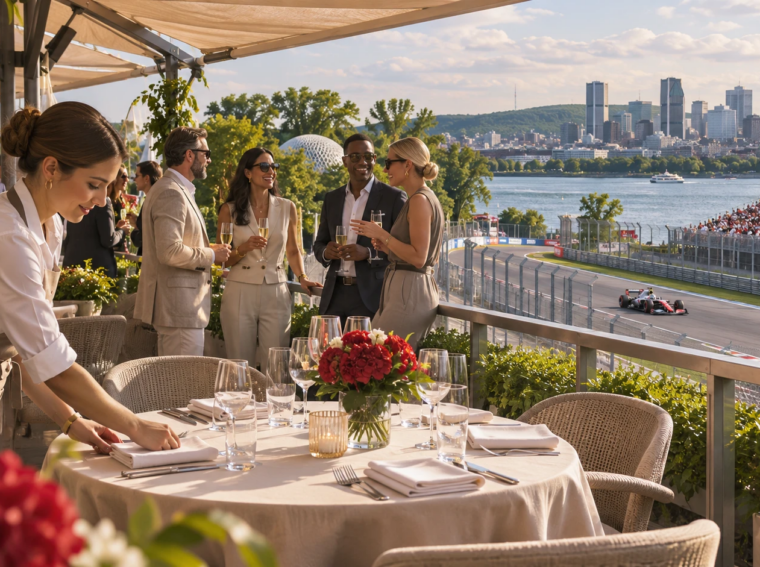
Montréal’s Grand Prix creates several economies around one sporting weekend. There is the ticketed event on Île Notre-Dame, the visitor economy of hotels and restaurants, and the commercial activity associated with entertaining clients and meeting partners. Understanding the event’s significance requires following those connections without adding incompatible figures into an inflated total.
A useful historical benchmark comes from Canada Economic Development’s published briefing, which cites CAD 67.4 million in Québec economic spin-offs from the 2023 edition. That is an explicitly dated study result, not a newly measured total for 2026. Keeping the year visible makes the figure informative rather than misleading.
The visitor experience creates the wider market
A race ticket rarely accounts for the entire trip. Visitors may stay several nights, eat outside the circuit and explore neighbourhoods between sessions. The benefit for a local business depends on whether it can turn that demand into a good experience, with adequate staffing and clear information about reservations and access.
Montréal’s Grand Prix experience continues long after spectators leave the circuit. Over dinner or drinks, fans revisit qualifying laps, debate tyre strategies and discuss the next session’s favourites, with adults checking the odds on 1 mln bet adding their own predictions to the conversation. For local restaurants, bars and hotels, these gatherings extend the race weekend beyond the grandstands and make hospitality part of the event’s appeal.
The city’s transport network is part of the commercial picture as well. An event on an island needs movement to work efficiently. A visitor who understands the route and expected journey time has more freedom to plan a meal or an evening outing instead of leaving every decision until the last crowded departure.
Four figures that should stay separate
- Unique visitors count people rather than repeated entries across several days.
- Visitor spending describes purchases associated with the trip.
- Economic output measures activity using the study’s stated methodology.
- Public costs include the services and commitments required to host the event.
None of those measures is useless, but each answers a different question. A crowded hotel does not by itself establish net public benefit, and a high attendance total does not tell a restaurant how much additional revenue it earned. Good reporting explains the measure before celebrating the size of the number.
Local preparation determines who benefits
Small businesses can respond more effectively when schedules and access arrangements are communicated early. Suppliers need to anticipate demand, while staff need a workable way to reach the area. These details rarely dominate the sporting broadcast, yet they influence whether the commercial opportunity feels positive to the people delivering it.
Residents have legitimate interests too. Noise, congestion and pressure on space should be considered alongside visitor spending. A durable host-city relationship depends on managing those effects, not assuming that an internationally recognised event automatically settles every local question in its favour.
The timing of a booking also influences who can benefit. Early information gives visitors a wider choice of neighbourhoods and lets businesses prepare staffing, while clear cancellation terms help both sides manage a change of plan.
Montréal’s Grand Prix remains economically important because it concentrates international attention and travel demand around a distinctive urban experience. Its value is best demonstrated through transparent studies and businesses that can explain what the weekend changes for them. That approach gives the event a stronger commercial case than a collection of impressive numbers with different years and definitions attached.