
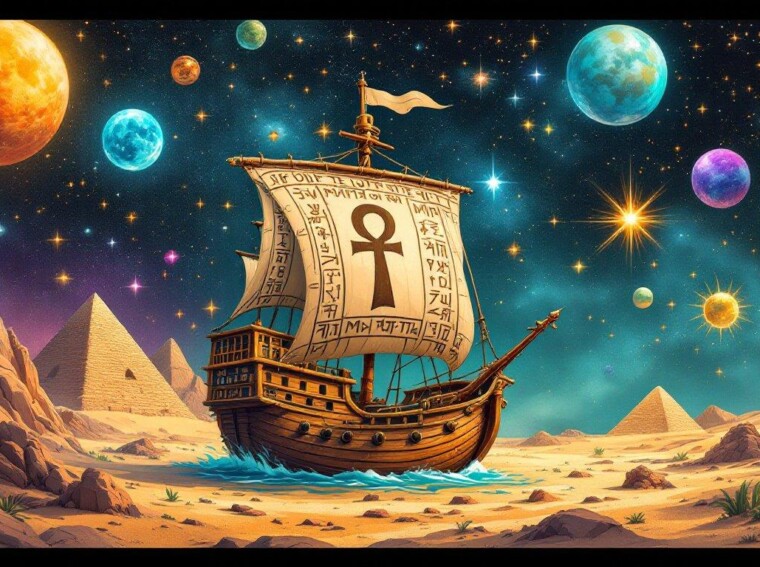
Imagine opening a game and finding yourself on a pirate ship. Treasure chests line the deck, waves crash against the hull, and a distant island promises secrets waiting to be discovered.
Now imagine another game set inside an Egyptian temple, with mysterious symbols, golden statues, and artwork inspired by ancient mythology.
The two games might use surprisingly similar mechanics. Yet they can feel completely different.
That’s the power of a good theme.
Game developers use settings, characters, music, and visual details to give familiar gameplay a distinctive identity. Sometimes the result is an enormous world that takes weeks to explore. Other times, the entire experience unfolds on a single screen.
Both approaches reveal how much storytelling can happen without a traditional story.
A Game World Doesn’t Need to Be Enormous
When gamers discuss worldbuilding, they often think of massive role-playing games.
Titles such as Skyrim, The Witcher 3, and Elden Ring create elaborate environments with histories, characters, locations, and interconnected stories.
But worldbuilding isn’t exclusively about map size.
A puzzle game can suggest an entire civilization through its architecture. A racing game can communicate the personality of a futuristic city using lighting and sound. A simple matching game can evoke a tropical island through its colors and animations.
These are miniature worlds.
They don’t need hundreds of characters or extensive dialogue. They just need enough recognizable details to establish a setting.
A player sees the environment, understands its basic premise, and begins interacting with it.
The experience can feel distinctive even when its underlying mechanics are familiar.
Why Certain Themes Appear Everywhere
Some settings are particularly useful because audiences recognize them immediately.
Pirates suggest treasure, exploration, ships, and hidden islands. Ancient Egypt evokes temples, hieroglyphs, and mythology. Outer space introduces planets, stars, futuristic machinery, and unfamiliar environments.
Fantasy settings can include dragons, castles, magical artifacts, and mysterious creatures.
These themes work across genres because they offer developers a shared visual vocabulary.
Consider how different games use pirates.
An open-world adventure might let players sail between islands. A strategy game could focus on managing a fleet. A puzzle title might use treasure maps and locked chests, while a casual game could use pirate-inspired artwork and symbols.
The setting provides continuity even though the gameplay changes.
Players don’t need a long explanation to understand the atmosphere.
They recognize the world almost immediately.
How Themes Change the Experience of Familiar Mechanics
A game mechanic is the action a player performs. A theme provides the context surrounding it.
Consider a matching game.
Without artwork, it might involve arranging colored shapes. With a fantasy theme, those shapes become magical crystals. In a science-fiction setting, they might represent energy cells powering a spacecraft.
The core interaction remains recognizable.
Yet the presentation influences how players perceive it.
The same principle applies to many types of digital entertainment, including free online slots on virtual-coin social gaming platforms.
A slot-style game might feature an underwater kingdom, an ancient civilization, or a space exploration setting. The theme changes its artwork, symbols, soundtrack, and overall atmosphere, even when its underlying reel-based mechanics remain similar.
These are casino-inspired entertainment formats rather than conventional cash-wagering games. Their randomized outcomes should be understood according to the platform’s rules, not as events that can be predicted from visual themes or previous results.
The artwork creates the setting.
The game rules determine how the experience operates.
That difference is essential, especially when visually similar games use different mechanics.
Four Themes That Keep Inspiring Developers
1. Pirate adventures
Pirates offer instant storytelling possibilities.
Treasure maps, mysterious islands, tropical storms, and ships provide visual elements that work in everything from action adventures to casual puzzles.
The theme naturally suggests discovery and exploration.
Developers can create a sense of adventure without needing to build an enormous ocean.
2. Ancient civilizations
Ancient Egypt, Greece, and other historical settings provide recognizable architecture, symbols, and myths.
Games can draw on these elements to create mysteries, archaeological adventures, or visually distinctive environments.
Historical inspiration also gives designers opportunities to combine familiar imagery with original fictional worlds.
3. Space exploration
Science fiction provides unusual freedom.
Developers can invent planets, alien landscapes, futuristic machines, and unfamiliar civilizations without being restricted by a real-world location.
A space-themed puzzle can feel very different from a medieval fantasy game, even when both use similar interactions.
4. Underwater worlds
Oceans offer color, movement, and mystery.
Coral reefs, shipwrecks, deep-sea creatures, and submerged ruins provide a setting that can feel peaceful or adventurous depending on the presentation.
This flexibility makes underwater themes suitable for many different gaming genres.
Music and Animation Complete the Illusion
Visuals establish the setting, but sound and movement help make it convincing.
A pirate adventure might feature creaking wood, waves, and orchestral music. A futuristic game could use electronic effects and mechanical sounds.
In a fantasy environment, even a short musical cue can suggest magic or mystery.
Animation adds another layer.
A flickering torch makes an ancient temple feel inhabited. Moving clouds create depth in a landscape. A spaceship passing through the background suggests activity beyond the playable area.
None of these details needs to affect the rules.
Their purpose is to make the environment feel coherent.
However, presentation should never obscure important gameplay information. Players still need to understand what they are doing and how their actions relate to the game’s mechanics.
The most effective themes create atmosphere while preserving clarity.
Adventure Can Come in Different Sizes
Not every player wants the same type of adventure.
Some enjoy spending entire evenings exploring open worlds. Others prefer a shorter experience built around an interesting setting.
PlayMyWorld explored that variety in its article Adventure-Themed Games for the Ultimate Summer Getaway.
The feature highlights a range of adventure experiences, including open-world exploration, puzzle games, action titles, and more portable forms of gaming.
That range illustrates how an adventure theme can support very different levels of commitment.
A player may spend hours discovering secrets in a large fictional world or enjoy a shorter game that captures only a small part of that atmosphere.
Both can communicate a sense of place.
The difference is how much of that world the player is invited to explore.
When Theme Becomes More Than Decoration
A weak theme is little more than a collection of pictures placed over a game.
A stronger theme creates consistency.
Its artwork, sound, interface, animations, and overall mood support the same creative idea.
A game set in a frozen landscape should feel different from one taking place in a tropical jungle. If both use identical presentation with only a few symbols replaced, the setting becomes less convincing.
This is why memorable games pay attention to small details.
The best visual identities aren’t necessarily the most elaborate. They are the ones that communicate a clear idea and maintain it throughout the experience.
For casual games, this consistency is particularly important because there may be less time to establish a distinctive atmosphere.
The setting needs to make an impression quickly.
The Appeal of a World You Can Enter in Minutes
Gaming offers countless ways to visit imaginary places.
Some require lengthy campaigns and detailed exploration. Others introduce their worlds through a handful of recognizable images and sounds.
Neither approach has a monopoly on creativity.
A pirate ship can establish adventure before a character speaks. An ancient temple can suggest mystery without a lengthy introduction. A distant planet can inspire curiosity through nothing more than its landscape.
Themes allow developers to turn familiar interactions into experiences with personality.
And as games continue appearing across different platforms and formats, that creative power remains valuable.
Sometimes the journey takes a hundred hours.
Sometimes a convincing miniature world is only a few clicks away.