

In 2026, image to video AI has become a core tool for creators, brands, and marketers who want to turn static photos into dynamic short-form content. But not all generators handle motion equally well. The key differentiator now is motion consistency—how smoothly the AI maintains camera movement, subject focus, and scene coherence from frame to frame. Below are the top 5 image to video AI generators that stand out for stable, believable motion, especially for vertical shorts, product videos, and social content.
1. Pollo AI
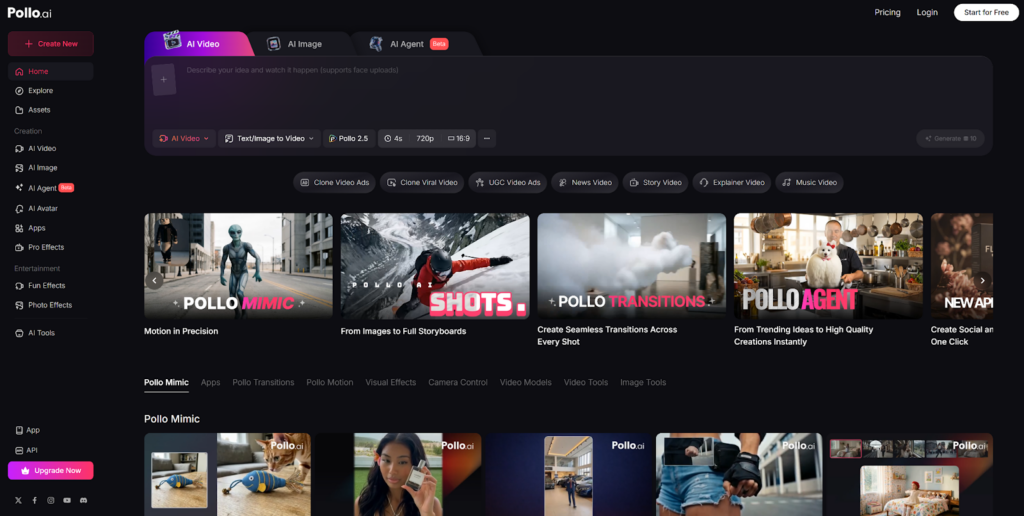
Pollo AI tops this list because it’s built specifically for short-form social content and optimized for motion consistency from the ground up. Rather than just animating images with random pans and zooms, Pollo AI analyzes depth, subject position, and desired narrative flow to produce stable, cinematic movement across the entire clip.
Key features:
- Advanced motion engine: Pollo AI creates smooth, continuous camera paths (pans, zooms, parallax) that feel intentional, not jittery or AI-generated. Foreground and background layers are separated intelligently to simulate 3D depth.
- Narrative-aware templates: You choose templates for product showcases, transformations, tutorials, or testimonials. The AI then matches motion style to content type—slower, elegant movement for luxury products; faster, punchier moves for UGC and viral shorts.
- Brand-safe control: Set your fonts, colors, logos, and preferred motion intensity once. Pollo AI keeps motion consistent with your brand identity across every video.
- Platform optimization: Outputs are tuned for TikTok, Reels, and YouTube Shorts, with built-in safe zones for text and stable framing so your main subject doesn’t drift out of view.
- Iterative versioning: Generate multiple variations from the same images, each with slightly different motion paths and pacing.
For creators and teams who care about social performance and a professional, steady look, Pollo AI offers one of the most reliable image to video workflows.
2. Dreamina AI

Dreamina AI focuses heavily on visual richness and cinematic style, making it a strong choice for users who want artistic, film-like animations with good motion consistency. It excels at turning static photos into sequences that feel like shots from a movie rather than simple slideshows.
Key features:
- Cinematic motion presets: Dreamina AI offers built-in “shot styles” like dolly-in, orbit, and parallax sweep. These motion patterns are designed to remain smooth and consistent throughout the clip, avoiding sudden jumps or unnatural repositioning.
- Depth-aware rendering: The system constructs a pseudo-3D scene from each image, allowing it to maintain correct perspective while moving “camera” paths through the scene.
- Style and grading controls: You can apply color grading presets and film looks that stay stable across all frames, reinforcing visual consistency beyond motion alone.
- Scene chaining: When using multiple images, Dreamina AI tries to transition between them with consistent motion direction and speed, so the viewer experiences a continuous flow instead of disjointed cuts.
- Storyboard support: For more advanced users, you can guide the sequence with a simple storyboard prompt, and the AI will align its motion choices with your intended rhythm and emphasis.
Dreamina AI is especially well-suited to portfolios, cinematic reels, and brand films where a smooth, polished motion aesthetic is essential.
3. Seedance
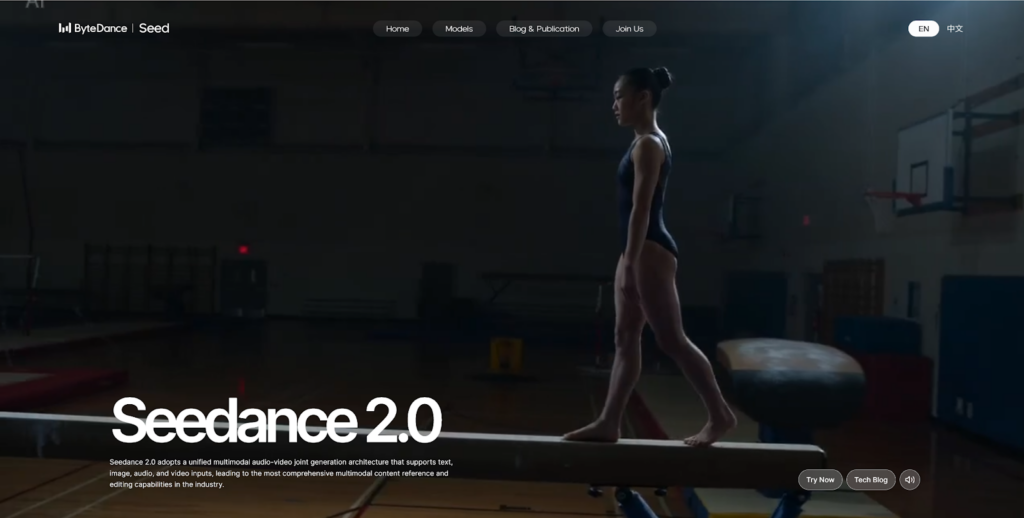
Seedance stands out for its balance between stability, customization, and speed. It’s designed for creators who want precise control over motion consistency but still appreciate the automation that image to video AI provides.
Key features:
- Motion track tuning: Seedance allows you to set parameters like motion intensity, direction bias, and focus target. The AI then maintains those constraints throughout the entire clip to avoid erratic movement.
- Subject locking: You can designate a primary subject (face, product, logo), and Seedance works to keep it framed consistently, minimizing drift and awkward cropping.
- Keyframe assistance: While you don’t have to micromanage, you can set a few keyframes and let the AI smoothly interpolate motion between them, producing stable, controlled camera moves.
- Repeatable presets: Once you dial in a motion style you like, save it as a preset. Every new video generated with that preset has similar motion character and consistency.
- Fast rendering: Seedance prioritizes speed without sacrificing coherence, making it ideal for teams that push out frequent social content and need dependable results on tight timelines.
If you want a hybrid of manual control and smart automation with strong emphasis on stable movement, Seedance is a very solid choice.
4. MotionFlux AI
MotionFlux AI is focused almost entirely on motion control. It’s a powerful option for users who already have strong visual assets and want to ensure the animation feels professional, stable, and technically refined from first frame to last.
Key features:
- Physics-inspired motion engine: MotionFlux uses smoothing algorithms that mimic real camera rigs, reducing jitter and artificial-feeling acceleration or deceleration.
- Layer-aware animation: It identifies foreground, midground, and background elements, then animates them with different speeds to create a realistic sense of depth while keeping transitions between frames coherent.
- Temporal coherence checks: Before finalizing a render, MotionFlux analyzes the clip for abrupt changes in direction, scale, or subject placement and auto-corrects them to maintain visual consistency.
- Technical controls: For advanced users, settings like motion blur, shutter angle, and easing curves are available, enabling fine-tuned control over how motion feels across the sequence.
- Multi-format outputs: MotionFlux is used not only for social content but also for presentations, trailers, and product demos where stable, high-quality motion is essential.
MotionFlux AI is ideal for teams that care deeply about motion design quality and want granular control over how their images move over time.
5. FlowVision Studio
FlowVision Studio concentrates on making image to video generation accessible while still delivering reliable motion consistency. It’s a great entry point for marketers and solo creators who want stable, good-looking animations without a steep learning curve.
Key features:
- One-click motion styles: Choose from presets like “Smooth Pan,” “Subtle Parallax,” or “Dynamic Zoom.” FlowVision optimizes for continuity, so movements stay consistent from start to finish.
- Auto-framing AI: The tool detects key subjects and automatically keeps them centered or aligned according to common composition rules, reducing awkward framing shifts.
- Template-driven workflows: Templates for ads, story posts, explainers, and intros come with pre-set motion behaviors, ensuring that every part of the video moves in a coordinated way.
- Audio-aware timing: FlowVision syncs motion changes with beats or transitions in audio, which naturally increases the perception of smoothness and consistency.
- Beginner-friendly interface: You don’t need technical knowledge; the interface focuses on a few clear sliders and presets, while the engine protects you from chaotic or inconsistent motion choices.
FlowVision Studio is best for users who want trustworthy, stable motion and a fast path from static images to finished content, without getting lost in technical details.
Choosing the Right Image to Video AI for Motion Consistency
All five tools offer strong motion consistency, but they shine in slightly different scenarios:
- Pollo AI – Best overall for social-first creators and brands wanting consistent, on-brand motion for TikTok, Reels, and Shorts.
- Dreamina AI – Ideal for cinematic, artistic sequences where film-like motion and mood matter.
- Seedance – Great middle ground for users who want both AI automation and precise motion control.
- MotionFlux AI – Best for advanced users and teams focused on high-end motion design control.
- FlowVision Studio – Perfect for beginners and busy marketers who want stable motion with minimal setup.
If your priority is converting static images into smooth, attention-grabbing short-form content at scale, starting with Pollo AI will give you a strong blend of motion consistency, usability, and social platform optimization. From there, tools like Dreamina AI, Seedance, MotionFlux AI, and FlowVision Studio can complement your workflow depending on how artistic, technical, or simple you need your image to video pipeline to be.