
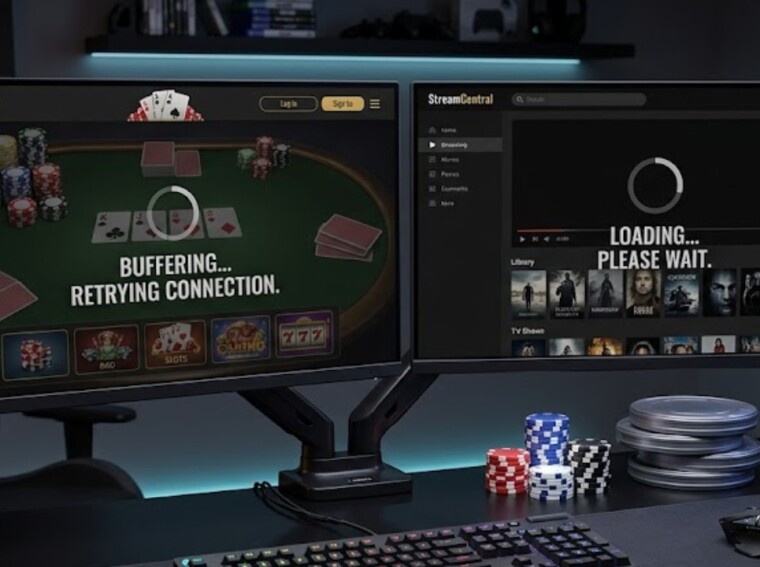
When you boot up an app, do you ever really think about what goes into making it load in just a few seconds? In today’s entertainment and media landscape, customers expect incredible speed and they often don’t even notice it until it doesn’t work. From streaming and video to creative activities to online gaming and gambling, modern consumers expect near-instant access, basically always-on uptime and rapid updates.
In highly competitive sectors, being able to provide all that has become the new standard in many ways. Even small improvements of milliseconds in speed can increase user retention and satisfaction, and thereby revenue. For example research shows that 63% of users will leave a mobile site if it doesn’t load after 3 seconds.
In a competitive market (digital entertainment is worth well over $1 trillion per year globally) small percentage differences can mean swings in the millions of dollars in revenue. So how do games and digital entertainment operations keep up?
Streaming and Gaming Demand Low Latency
Nowhere is super high speed more important than in online gaming. Here, latency (the delay between a user’s action and seeing its effects on screen) directly changes the users experience. Slight delays or buffering during a competitive fight or tense online blackjack hand can lead to impacted player performance, costing them time and potentially even money. This means more customer churn and lower retention rates, which impacts the general reputation of the operation in the market.
In the modern era streaming networks look to have a maximum buffer time of two seconds. Gaming networks look to have less than 50ms latency, while competitive events aim for even less than that.
Faster response times and minimal downtime in live service online gaming improve immersion, increasing gameplay time considerably. Especially in games with micro transactions such as battle passes, ensuring players can always get into new matches quickly and rarely experience latency (lag) issues can be a key driver of consistent revenue.
Big platforms like Netflix, Twitch and YouTube have global content delivery network systems (CDNs) to ensure that services can be delivered to users globally with low latency. Even big video games now have distributed global server locations, to ensure competitive play is possible across the world.
Faster service promotes user retention, which translates to good reviews, trust and then increased platform visibility. Whether that’s a Canadian online casino, an American mobile game or a European TV streaming service.
Casinos Need Fast Withdrawals to Be Competitive
The one digital entertainment sector in which speed also has to be thought of in another way is gambling. As well as providing low latency service in terms of games and user experience, online casinos also have to think about payout speeds for customers.
There is a lot of choice of fast withdrawals casinos across Canada though, so players often seek out comparison platforms like Casino.ca to find out exactly which casinos are the fastest. These expert reviewers assemble all the options in one place, so customers can make an informed choice with all the information available. From pure tech speed and reliability, to other factors like bonuses or game collections.
Time and time again in research casino players rate efficient and quick withdrawals as one of the most important aspects they look at when choosing a casino. So, for new customers and experienced gamblers alike, picking a site that has fast payouts is usually a priority.
In the early days of online casinos, deposits were the most important part to get right as instant. After all, no one will play your games if it takes an hour for the payment to process and get started.
For a long time, withdrawals had more leeway. Players were OK with waiting one to five days for a withdrawal as that was often standard in other financial transactions. But in today’s fast paced world of e-wallets and cryptocurrency – near instant withdrawals of one or two hours at most are the standard.
The Backend Tech Behind Digital Speed
Delivering the new standard of digital speed means significant infrastructure behind it. Broadly, a business tech stack can be split into frontend (what the customer sees) and back end (what happens behind the scenes).
One of the most important innovations in the past decade for digital speed has been cloud computing infrastructure, which enables businesses to use third-party systems to deliver global and scalable services from day one.
5G has also been a game changer, allowing hundreds of millions more people globally to access high speed internet – and therefore high speed services.
Just some of the things that modern digital entertainment providers, from streaming networks to gaming platforms to casino operators, need to consider when optimizing for speed include:
- Content Delivery Networks (CDNs)
- Edge Computing
- Distributed servers
- Cloud Computing
- Bandwidth optimization
- Fiber Optic Networks
- 5G Networks
- Load Balancers
Managing all of this is no easy task. Whole departments of a dozen people can work for weeks just to make an app load a second faster, for example.
As player expectations rise, all of this stuff becomes something mandatory rather than an optional extra. Digital speed is something online entertainment consumers now expect without considering it too much, but there’s actually a lot of work that goes into managing it and making it happen.