
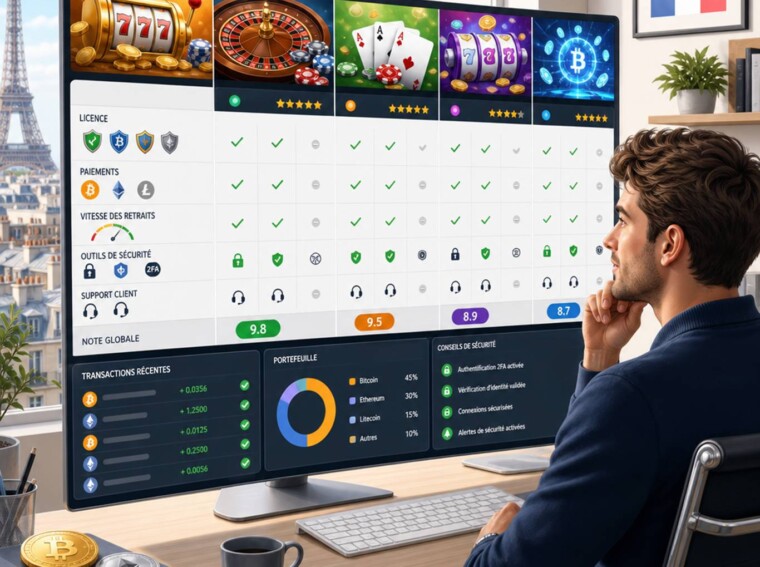
Online casino-style play is evolving fast, and crypto payments sit at the center of that change. For players in France, combining familiar casino mechanics with coins like Bitcoin feels natural, but the landscape is not always simple. Licensing, payment flows, and safer play tools all matter when narrowing down a platform for long-term entertainment.
Understanding how crypto casinos work
A crypto casino follows the same basic loop as any online casino-style platform. Players sign up, fund their balance, choose games, track wins and losses, and use loyalty systems that reward engagement. The main difference lies in the unit of account. Balances may be held in Bitcoin or another coin, with dedicated wallets instead of only cards or bank transfers.
French players often explore comparison hubs to understand how those setups behave before committing to a new account. A directory reached through a search phrase like Casino Bitcoin France typically highlights language options, mobile performance, and how smoothly a service works with coin wallets and euro conversions. Taken together, these details help readers form their own first impression of this niche.
Licensing basics for French players
Licensing is the backbone of any structured casino environment, whether payments are in euros or coins. A licence is issued by an authority that grants permission to offer specified types of games and sets conditions for fairness, account checks, and dispute processes. Even without naming individual regulators, it is possible to check whether a platform clearly displays its licence number and jurisdiction.
Some licences focus on game integrity and payout handling, while others also cover advertising conduct and player safeguards. When examining a crypto casino from France, many readers look for clear information about who regulates the site, where it is based, and how complaints are handled. Transparent terms, accessible policies, and visible licensing details all contribute to trust in the long run.
Payments wallets and practical steps
Crypto casinos layer several payment steps on top of traditional banking habits. Instead of only card deposits, players move coins from their own wallet to the casino wallet, then convert back when withdrawing. In practice, three elements define how comfortable this feels day to day: speed, clarity of fees, and ease of tracking.
Speed depends on the coin used and the platform’s internal processing schedules. Clear information about estimated confirmation times and any minimum or maximum amounts helps players plan their sessions rather than waiting around and guessing when funds will arrive. Fee transparency matters just as much. Separate network costs and platform charges should be explained in plain language so that players know what each transfer costs in advance.
Tracking is the third piece. Good account interfaces show incoming and outgoing movements with timestamps, transaction IDs, and conversion rates at the time of processing. This mirrors the transaction history in a banking app and makes it much simpler for players to reconcile their own wallet records with what the casino displays.
French legal context and safer play tools
The legal framework for games of chance in France remains structured, and only certain categories of online gambling are formally authorised. As a result, many crypto casinos operate from other jurisdictions even when they target French-speaking audiences. This does not prevent players from encountering them, so understanding the available safeguards becomes important when comparing options.
Safer play in this context is about control and information. Time reminders nudge players to check how long they have been active in a session. Loss and deposit limit tools help keep spending aligned with a personal budget. Cooling-off options allow a break from play for a set period. When a platform with crypto payments offers clear access to these tools, it mirrors the best practices already familiar from regulated euro-based sites.
Information also includes game data. Return-to-player values, volatility indicators, and rule summaries empower players to decide whether a slot or table game fits their style. Presenting those details in straightforward terms contributes to a more informed experience, even when the balance itself is held in Bitcoin.
Evaluating game libraries and fairness
Beyond licensing and payments, the actual game lineup shapes day-to-day enjoyment. Players used to traditional online casinos expect a mix of slots, table games, live streams, and sometimes crash-style or arcade games. Crypto casinos often mix established studio titles with coin-themed experiences, and some introduce provably fair systems where outcomes can be verified using cryptographic proofs.
From an expert viewpoint, fairness rests on three pillars. First, games should come from recognised developers whose titles appear across multiple licensed platforms. Second, payout percentages and rules should be accessible from within the game interface, not hidden away in a detached FAQ. Third, any provably fair offering should explain the verification process in steps that an ordinary player can follow without specialist training.
In France, many casino fans are already familiar with probability concepts from sports betting and national lottery-style games. Clear fairness information in a crypto setting builds on that understanding rather than replacing it, helping players transfer existing knowledge to a newer format.
Finding a balanced crypto casino experience
Choosing a crypto casino from France ultimately comes down to a blend of structure and style. Licensing information, wallet handling, clear transaction histories, and accessible safer play tools provide the framework. Game variety, interface comfort, and bonus mechanics add the flavour that keeps a player interested over time.
For readers who enjoy experimenting with new payment methods and game types, crypto casinos represent another step in the wider evolution of online gaming rather than a complete break from past habits. By paying attention to licensing signals, examining how payments are presented, and valuing transparency around fairness and limits, players can shape an experience that suits their preferences while staying grounded in solid information.
The result is not about chasing the newest trend at any cost, but about treating coins like any other gaming currency and expecting the same clarity, structure, and entertainment value that seasoned casino fans already look for in more traditional environments.