
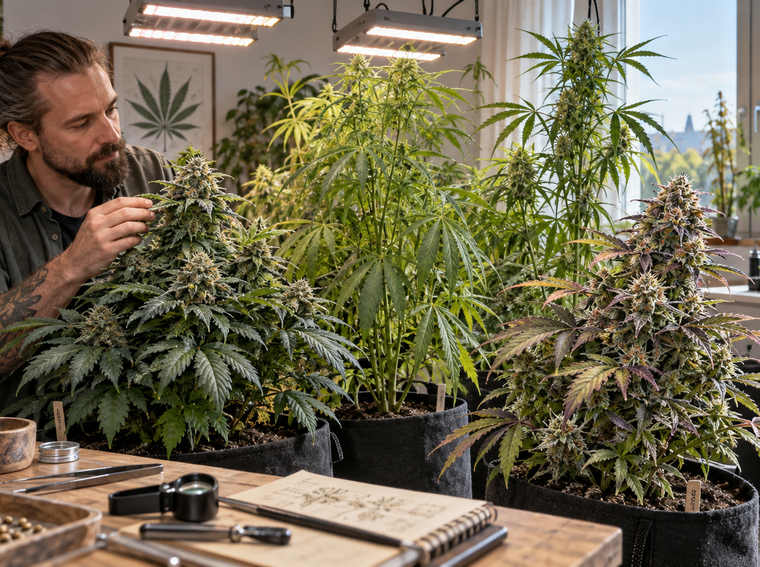
Cannabis genetics have moved from regionally adapted landrace populations to highly selected modern hybrids bred for potency, flavor, resin, yield, resilience, and consistency. Today’s cultivars may look very different from their ancestors, but the traits breeders use still come from older genetic pools shaped by geography, climate, and generations of selection.
What Are Cannabis Genetics?
Cannabis genetics are the inherited characteristics passed from parent plants to their offspring. They influence structure, flowering time, cannabinoid profile, terpene composition, resin production, and environmental tolerance. Modern breeding increasingly focuses on measurable, heritable traits rather than broad categories alone.
Landrace Strains: The Foundation of Modern Cannabis
Landrace strains are populations that developed over many generations in relatively isolated regions. Climate and local selection shaped their characteristics. As a result, landrace genetics can contain valuable traits such as drought tolerance, humidity adaptation, unusual terpene profiles, resin production, and distinctive cannabinoid expression.
Afghan: Resin-Rich Indica Genetics
Afghan cannabis is a classic foundation of indica-dominant breeding. Plants are traditionally short, stocky, broad-leaved, and adapted to dry conditions and relatively short seasons. Their main breeding value is heavy resin production, compact structure, and relaxing or sedating effects. Afghan and related Hindu Kush genetics later became building blocks in many hybrids.
Thai: Tropical Sativa Adaptation
Thai cannabis evolved in tropical conditions and is associated with tall plants, airy flowers, vigorous growth, and long flowering times. Thai genetics became valued for energetic effects and distinctive aromas, although breeders often crossed them with faster lines to improve flowering speed and manageability.
Durban Poison: Energetic South African Sativa
Durban Poison is a famous South African sativa associated with sweet, pine-like, spicy aromas and an energetic effect profile. Its breeding value comes from vigorous growth and distinctive terpene expression. Durban-derived genetics later became especially visible in American dessert-oriented hybrids.
Acapulco Gold: Classic Mexican Sativa Heritage
Acapulco Gold represents classic Mexican sativa heritage. It became known for earthy, sweet, spicy notes and euphoric, stimulating effects. Acapulco Gold remains an important symbol of the era when geography was central to cannabis identity.
The Shift from Landraces to Modern Hybrids
The 1970s and 1980s marked a turning point. Breeders gained access to cannabis from Asia, Africa, Latin America, and the Middle East and began crossing geographically distant populations. Their goals were practical: shorter flowering, higher yield, more resin, improved structure, stronger aroma, greater resilience, and more predictable performance.
Key Hybrid Milestones in Cannabis Breeding
OG Kush and the Rise of California Hybrid Genetics
OG Kush emerged in California in the 1990s and became one of the most influential names in modern cannabis. Its exact pedigree remains debated, but it is commonly linked to Chemdawg-related material and Kush genetics, often associated with Hindu Kush ancestry. Its fuel, citrus, pine, and earthy terpene profile, potency, and resin production made it a major parent for later hybrids.
GSC and the Dessert-Flavor Revolution
GSC, formerly widely known as Girl Scout Cookies, is commonly described as an OG Kush × Durban Poison cross. It helped transform market expectations by combining high potency with sweet, doughy, minty, and earthy aromas. Its success encouraged breeders to pursue dessert-like profiles and strong resin production rather than potency alone.
Gelato and the Modern Designer Hybrid Era
Gelato, descended from Sunset Sherbet and GSC-related genetics, became one of the defining designer hybrids of the 2010s. Sweet, creamy, fruity flavors, dense trichome production, and high potency made it a model for premium modern breeding. It also shows how many current cultivars come from already complex hybrid gene pools.
How Modern Cannabis Breeding Works
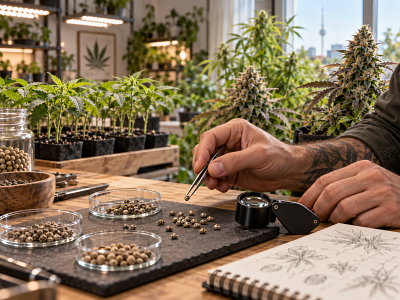
Modern breeding begins with a target: cannabinoid content, terpene intensity, resin production, yield, flowering time, disease resistance, structure, or uniformity. Parent plants are crossed, offspring are evaluated, and selected individuals are used for further selection, backcrossing, or line development.
A good phenotype is not automatically genetically stable. One exceptional plant can still produce variable offspring, so several generations of selection may be needed before desirable traits become predictable from seed.
True F1 Hybrids and Genetic Uniformity
A true F1 hybrid is the first filial generation produced by crossing two sufficiently inbred, genetically consistent parental lines. These offspring can show heterosis, or hybrid vigor, together with strong uniformity.
For professional production, true F1 hybrids can offer similar plant height, flowering, yields, chemical profiles, and improved resistance to specific stresses or diseases.
Cannabis Seeds and the Preservation of Genetics
Cannabis seeds are physical carriers of breeding history. Each seed contains a new genetic combination inherited from its parents, so parental quality, stability, and accurate lineage information matter. For collectors, preservation projects, and breeders operating where local law permits, marijuana seeds can also help maintain older genetic material that might otherwise disappear.
Specialist catalogs such as Ganjafarmer.com make it easier to compare classic genetics, established hybrids, and newer breeding directions in one place. A seed can therefore preserve traits for future breeding.
Breeding for Potency, Flavor, Yield, and Resilience
THC remains an important commercial target, but modern hybrids are selected across several dimensions at once. Breeders evaluate terpene composition, trichome density, flower structure, maturation time, yield, environmental tolerance, pathogen resistance, and aroma retention.
Terpenes are especially important because they differentiate cultivars with otherwise similar cannabinoid levels. Fuel, citrus, pine, berry, tropical fruit, cream, pastry, and candy-like profiles are now deliberate breeding targets.
Risks of Genetic Bottlenecking
Repeatedly using a narrow group of elite parents—especially for very high THC, extreme resin production, or fashionable flavor profiles—can reduce genetic diversity. This is genetic bottlenecking.
A narrow gene pool may increase vulnerability to disease or environmental change and eliminate rare traits that later prove useful. A resistance gene, unusual terpene pathway, or minor-cannabinoid profile that seems unimportant today could become valuable tomorrow. Preserving landrace and heirloom genetics is therefore a form of genetic insurance.
Genomic Science and the Future of Cannabis Genetics
DNA mapping, molecular markers, chemotype analysis, and genomic selection are giving breeders new ways to identify useful traits. Genetic data can help guide selection earlier and more precisely instead of relying only on mature-plant observation.
This is particularly relevant to minor cannabinoids such as CBD, CBG, and THCV. Future breeding is likely to focus less on maximum THC alone and more on targeted cannabinoid ratios, terpene combinations, disease resistance, and agronomic performance.
Landrace vs Modern Hybrid Comparison
| Type / Example | Origin | Growth Traits | Flavor / Aroma | Typical Effects | Breeding Importance |
| Afghan | Afghanistan | Short, stocky | Earthy, hash-like | Relaxing, sedating | Resin, compact structure |
| Thai | Thailand | Tall, long flowering | Herbal, spicy, tropical | Energetic | Vigor, tropical adaptation |
| Durban Poison | South Africa | Vigorous sativa | Sweet, pine, spice | Uplifting | Sativa traits, terpenes |
| Acapulco Gold | Mexico | Tall, warm-climate sativa | Earthy, sweet, spicy | Euphoric | Mexican sativa heritage |
| Modern hybrids | Global | Selected for consistency | Highly targeted | Cultivar-specific | Potency, flavor, yield, resilience |
A second comparison shows how breeding strategy has evolved:
| Genetic Category | Main Source | Uniformity | Main Goal |
| Landrace strains | Regional populations | Variable | Local adaptation |
| Traditional hybrids | Crosses of distinct lines | Moderate | Combine useful traits |
| Designer hybrids | Elite modern parents | Moderate to high | Flavor, potency, resin, appeal |
| True F1 hybrids | Inbred parental lines | High | Uniformity, vigor, predictability |
Conclusion: Preserving Diversity While Advancing Breeding
The evolution of cannabis genetics is a progression from regional adaptation to deliberate genetic design. Landraces supplied the foundation; breeders in the 1970s and 1980s combined distant gene pools; OG Kush, GSC, and Gelato helped define successive stages of modern hybrid development; and true F1 programs now aim for greater uniformity and performance.
The next challenge is balance. Genomic science can create more precise, resilient, purpose-built cultivars, but innovation depends on maintaining the diversity that made those advances possible. Afghan resin production, Thai tropical adaptation, Durban Poison vigor, and Mexican sativa heritage remain valuable genetic resources. Preserving them while developing new hybrids is essential to the long-term future of cannabis breeding.