
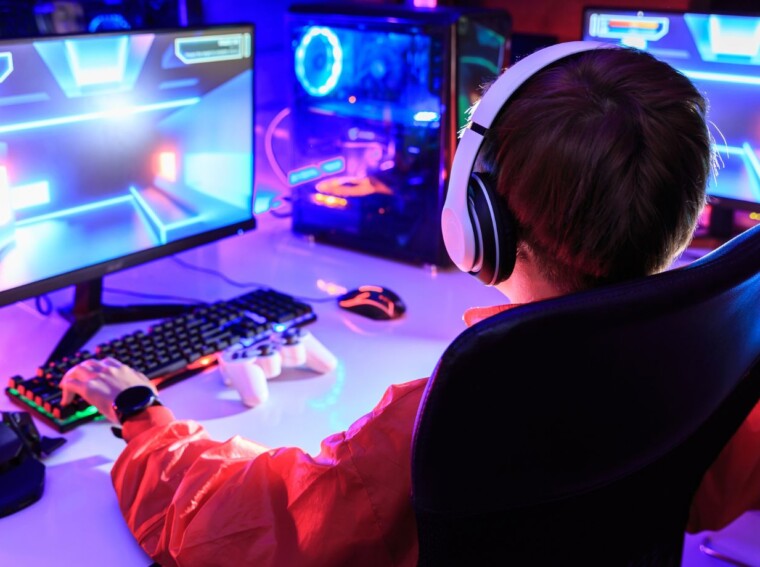
Watch the back half of any online tournament and you can spot the players who are about to lose. It is not in their aim or their decision-making, at least not at first. It is in their shoulders creeping toward their ears, the slow slide down the chair, the increasingly frequent glances away from the screen. Mechanical skill holds up for about two hours. After that, the match is often decided by who manages their own body better, and most players have never trained that skill at all.
This is the part of gaming nobody streams. Endurance is unglamorous. There is no highlight reel for good posture, no clip that goes viral because someone remembered to drink water. But anyone who has tried to stay sharp through a best-of-five that runs past midnight knows the truth: the difference between clutching the final round and throwing it is frequently physical, not technical. The grind everyone romanticizes is, in practice, a test of how long you can keep your body from sabotaging your hands.
Fatigue is a mechanical problem before it is a mental one
People talk about late-session mistakes as lapses in concentration, as if focus simply evaporates. It usually does not. It gets crowded out. A stiff neck, dry eyes, a full bladder you have been ignoring for forty minutes, the dull ache of wrists held at a bad angle since the afternoon. Each one is a small tax on attention, and they compound. By the time you notice you are “tired,” your body has been sending invoices for an hour, and your brain has been quietly paying them out of the same account you were using to track enemy positions.
This reframe matters because it changes the fix. If late-game errors were purely about willpower, the answer would be to concentrate harder, which is both useless advice and the exact thing that accelerates burnout. If they are mechanical, the answer is to remove the physical drains before they stack up. That is something you can actually engineer in advance, the same way you would optimize a loadout or a build order.
The setup is a stamina decision, not a comfort one
Start with the chair, because it is the single piece of gear you are in contact with the entire session. A seat that supports the lower back keeps your core from quietly working all day to hold you upright. Feet flat on the floor, knees near a right angle, elbows supported so your shoulders are not carrying the weight of your arms for hours. None of this is about luxury. It is about not asking dozens of small muscles to stay tense for the length of a feature film.
Then the screen. Push the monitor back to roughly an arm’s length and set the top of the display near eye level, so you are looking slightly down rather than craning your neck forward. Forward head posture is one of the most common and least noticed causes of end-of-night fatigue, because the further your head drifts from over your spine, the harder your neck works to hold it there. Add a little ambient light behind the monitor as well. A single bright screen in a dark room forces your pupils to constantly adjust against the surrounding blackness, and that low-grade effort adds up over hours.
Sound deserves a mention too. Cranking a headset for an entire session is its own kind of fatigue, and not only for your ears. Constant high volume keeps your nervous system in a slightly elevated state, which feels like focus early on and like exhaustion later. Running audio a notch lower than feels natural is one of those changes you will not notice in the moment but will feel at hour five.
The players who last treat breaks as part of the game
Eye strain is the sneakiest drain of all, because it builds without a clear signal until you already have a headache. The simplest defense is the 20-20-20 rule promoted by the American Optometric Association: every twenty minutes, look at something about twenty feet away for twenty seconds. It costs nothing, it takes less time than a respawn, and it interrupts the slow tunnel vision that sets in over a long session.
The same logic applies to the rest of the body. Between matches, the disciplined player stands up, refills the water, rolls the shoulders, and shakes out the hands. The instinct to power through “just one more” without moving is precisely the habit that guarantees a worse fourth hour. Breaks are not lost time stolen from practice. They are what makes the practice in the back half of the session worth anything at all.
Fuel matters more than the energy-drink marketing suggests
The default gaming diet of caffeine and sugar is built for a spike, not a session. A big energy drink delivers a sharp lift followed by an equally sharp crash, and the crash tends to land right when the stakes are highest. Steady hydration with water does more for sustained focus than any neon can, and food that releases slowly, rather than a pile of fast sugar, keeps your blood sugar from swinging your concentration around with it. None of this means joyless discipline. It means recognizing that what you put in during hour one is writing a check that comes due in hour four.
Everyone has a reset ritual, and that is the point
Where it gets personal is the in-between moments: the loading screens, the queue times, the rounds you are spectating. This is when players run whatever ritual gets their head back in the right place. One person resets with a specific playlist. Another steps onto the balcony for ninety seconds of cold air. Someone else has a snack they only eat during ranked, a small superstition that doubles as a cue.
Adults handle that downtime in their own way. Plenty of Canadian players who vape keep a device charged for those gaps between matches, restocked through an online shop like Vape Cloud that delivers across the country rather than a last-minute trip out. The specific contents of the ritual barely matter. What matters is having a deliberate cue that tells your brain to drop the tension from the last round and start the next one clean, instead of carrying every misplay forward into the next game.
What happens after you log off counts too
Recovery is the half of endurance that gets ignored entirely. Staring at a bright screen until the second you try to sleep keeps your brain wired and pushes back the rest you need to do it all again tomorrow. Stepping away from the display for even twenty minutes before bed, stretching out the hands and forearms that did all the work, and treating sleep as part of your training rather than the thing you sacrifice for it, is what lets a hobby stay sustainable across weeks and months instead of flaming out after a hot streak.
Comfort is a competitive edge, not a luxury
There is a stubborn idea in gaming culture that toughing it out is part of the grind, that serious players push through discomfort. It is backwards. The hardware arms race has made raw performance nearly equal at the top, and the gap now opens up in the third and fourth hour, where preparation of the body, not the rig, decides things. The player who set up their space to be sustainable is still making clean reads when the one who muscled through is misclicking and blaming the connection.
So the next time the budget goes toward an upgrade, consider spending some of it below the desk and around the chair instead of on another frame rate you will not consciously notice. Endurance is a skill like any other, and it responds to training and preparation exactly the way aim does. The setup is just where you start.