
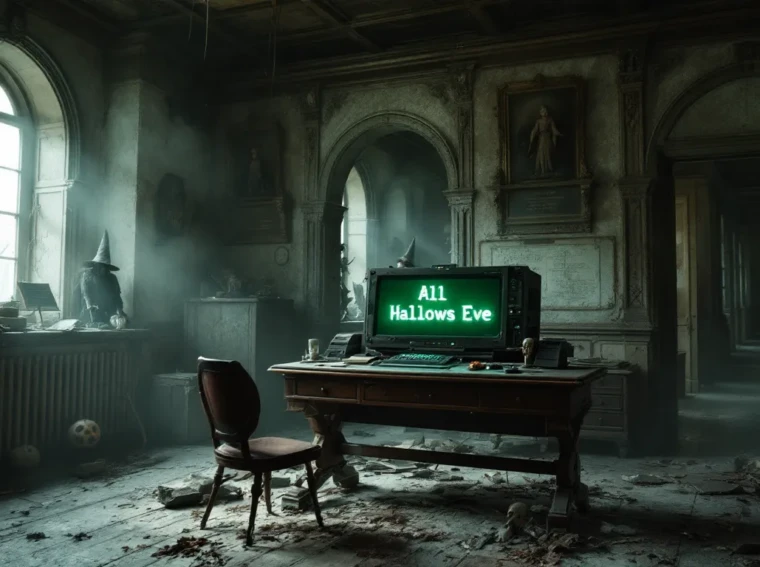
The Commonwealth is full of eerie locations and haunting stories, but few spots deliver atmospheric dread quite like the Museum of Witchcraft. Tucked away in the northern reaches of the map, this crumbling building hides more than cobwebs and forgotten exhibits, it’s home to one of the game’s most unsettling terminal entries: All Hallows Eve. This brief but chilling text fragment offers a glimpse into pre-war Halloween traditions while foreshadowing the nightmare waiting inside.
Unlike the straightforward terminal logs you’ll encounter at military installations or corporate offices, the All Hallows Eve entry serves as environmental storytelling at its finest. It’s not quest-critical, won’t unlock any secret vaults, and doesn’t hand you a legendary weapon. What it does do is set the mood for one of Fallout 4’s most memorable encounters. Whether you’re hunting for lore, completing the “Devil’s Due” quest, or just poking around Salem’s ruined streets, understanding what this terminal entry represents, and how to survive the horrors surrounding it, will enhance your playthrough significantly.
This guide breaks down everything you need to know: exact coordinates, step-by-step navigation through the Museum’s deathclaw-infested halls, combat strategies for different playstyles, and the hidden details Bethesda scattered throughout the location. Let’s jump into the wasteland’s creepiest corner.
Key Takeaways
- All Hallows Eve is an atmospheric terminal entry in Fallout 4’s Museum of Witchcraft that uses environmental storytelling to contrast pre-war Halloween celebrations with post-apocalyptic horror.
- The Museum of Witchcraft, located in Salem at coordinates X: 28, Y: 24, features a deadly deathclaw encounter that requires level 15-20 minimum and strategic combat tactics like mine placement or power armor tanking to defeat.
- The All Hallows Eve entry itself doesn’t trigger quests or unlock rewards, but reading it rewards curious explorers with lore depth and reinforces Bethesda’s theme of ‘frozen time’ on October 23, 2077.
- Combat strategies for the deathclaw include placing fragmentation mines in chokepoints, using weapons with crippling effects to disable its mobility, or adopting a stealth approach to bypass the encounter entirely.
- Completing the ‘Devil’s Due’ quest by returning the deathclaw egg to Lynn Woods yields the Deathclaw Gauntlet melee weapon and 200 XP, making it the more rewarding choice than returning it to Sergeant Lee.
What Is All Hallows Eve in Fallout 4?
All Hallows Eve is a terminal entry found on a computer inside the Museum of Witchcraft, located in Salem. The entry itself is a pre-war document, likely a promotional flyer or internal memo, referencing Halloween celebrations planned for the museum before the bombs dropped on October 23, 2077.
The text is deliberately vague and atmospheric rather than informative. It mentions seasonal decorations, special exhibits, and family-friendly activities planned for “All Hallows Eve,” the traditional name for Halloween. What makes this entry significant isn’t the content itself, but the context: you’re reading about cheerful Halloween plans while surrounded by genuine horror.
Bethesda uses this terminal as narrative irony. The museum celebrated spooky folklore and harmless scares before the war. Now, two centuries later, it houses a real apex predator that’s turned the building into a nest of bones and carnage. The contrast between pre-war Halloween fun and post-war survival terror is classic Fallout environmental storytelling.
From a gameplay perspective, the terminal doesn’t trigger quests or unlock doors. It’s purely atmospheric lore, the kind of detail that rewards exploration and adds depth to the Commonwealth’s backstory. Players who rush through the location for the “Devil’s Due” quest might miss it entirely, which is a shame because it’s one of the better examples of Bethesda’s world-building.
Where to Find the All Hallows Eve Terminal Entry
Location Details and Map Coordinates
The Museum of Witchcraft sits in the northeastern corner of the Commonwealth, in the town of Salem. If you’re navigating by map coordinates, you’re looking at approximately X: 28, Y: 24 on the in-game Pip-Boy map. Salem is directly north of Nahant Oceanological Society and northeast of Parsons State Insane Asylum.
The museum is impossible to miss once you’re in Salem proper, it’s the largest intact building in the area, with distinctive Gothic architecture and a large sign out front (though heavily weathered by 200 years of neglect). The building stands out visually from the surrounding ruins, which mostly consist of collapsed houses and overgrown foundations.
Fast travel points that get you close include Nahant Oceanological Society to the south or Parsons State Insane Asylum to the southwest. From either location, head north until you hit the coastline, then follow the shore to Salem. Alternatively, if you’ve discovered Coastal Cottage, it’s a short walk northeast.
The terminal containing the All Hallows Eve entry is located on the second floor of the museum, in what appears to be an administrative office or staff room. You’ll need to navigate through the ground floor and up a set of stairs (more on that in the walkthrough section).
How to Access the Museum of Witchcraft
Unlike some Fallout 4 locations that require lockpicking or terminal hacking to enter, the Museum of Witchcraft is accessible through the front door, no skills required. The door is unlocked, which should immediately raise suspicion. In the Commonwealth, unlocked doors in creepy locations usually mean someone (or something) is home.
There’s no alternative entrance or sneaky back door. You’re walking through the front, which funnels you directly into the museum’s ground floor exhibit hall. This is intentional level design: Bethesda wants you to experience the full atmosphere, starting with the eerie silence and scattered evidence of violence.
One important note: the Museum of Witchcraft becomes accessible very early in the game. There’s no faction lock, quest prerequisite, or level gate preventing you from entering. But, and this is crucial, the enemy inside doesn’t scale down to accommodate low-level players. Walking in at level 5 is technically possible but functionally suicidal. More on recommended levels below.
The Story Behind the All Hallows Eve Entry
Connection to the Museum of Witchcraft Quest
The All Hallows Eve terminal entry ties directly into the “Devil’s Due” side quest, which you can pick up from a trader named Sergeant Lee at the Slog settlement. Lee asks you to retrieve a deathclaw egg from the Museum of Witchcraft. The quest itself is straightforward: enter the museum, grab the egg, decide whether to return it to Lee or deliver it to the deathclaw nest at Lynn Woods.
What makes the quest memorable isn’t the objective, it’s the execution. The Museum is designed as a horror experience. The moment you step inside, the game shifts from open-world exploration to survival horror. Scattered holotapes (found near corpses throughout the building) tell the story of a doomed scavenging crew that entered the museum days earlier. Each holotape documents their growing panic as they realize something is hunting them.
The All Hallows Eve entry serves as the thematic anchor for this narrative. It reminds players that this place once celebrated harmless, commercialized versions of monsters and witches. Now it’s home to an actual killing machine. The terminal sits in an office that likely belonged to museum staff who planned Halloween events for families, people who had no idea their workplace would become a genuine house of horrors centuries later.
This contrast is reinforced by environmental details: you’ll find pre-war Halloween decorations (plastic skeletons, fake cobwebs) mixed with real skeletons and pools of dried blood. Bethesda’s environmental artists nailed the irony here.
Lore and Environmental Storytelling
Beyond the quest connection, the All Hallows Eve entry contributes to Fallout 4’s broader theme of “frozen time.” The Commonwealth is filled with snapshots of October 23, 2077, the day the bombs fell. Skeletons sit at dinner tables, cars are frozen mid-commute, and terminals contain emails that were never sent.
The Museum of Witchcraft represents a specific kind of frozen moment: the anticipation of a holiday that never came. The staff had planned Halloween festivities scheduled for October 31, just eight days after the nuclear apocalypse. Those decorations were never taken down, those events never happened, and the museum stood empty for two centuries until a deathclaw decided it made an excellent lair.
This kind of environmental storytelling is what Bethesda does best. Players who take the time to read terminals, listen to holotapes, and examine the environment get a richer experience than those who rush through objectives. The All Hallows Eve entry is optional content, but it rewards the curious.
One detail worth noting: the Museum’s exhibits include displays on the Salem Witch Trials, adding another layer of historical irony. Salem is famous for mass hysteria and unfounded accusations of supernatural threats in the 1690s. Now, in 2287, the town actually does have a legitimate monster problem, but nobody’s left to panic about it. That’s grade-A Fallout black comedy.
Step-by-Step Walkthrough: Reading the Terminal
Navigating the Museum Interior Safely
The Museum of Witchcraft is a vertical dungeon with three floors. You’ll enter on the ground floor, work your way up to the second floor (where the terminal is located), then potentially climb to the third floor depending on how thoroughly you explore.
As soon as you enter, you’ll notice the silence. No ambient combat music, no enemy markers on your compass, just unsettling quiet and the sound of your own footsteps. This is atmospheric setup. Don’t be fooled: the deathclaw is absolutely in here, and it’s aware of your presence.
The ground floor features the main exhibit hall with display cases, mannequins dressed as witches, and informational plaques about Salem’s history. You’ll also find the first bodies, members of the scavenging crew mentioned in the holotapes. Their corpses are positioned to create a breadcrumb trail leading you deeper into the building.
Follow the trail of destruction (overturned display cases, bloodstains, gouges in the floor) toward the back of the ground floor. You’ll find a staircase leading up. Before you climb, loot the ground floor thoroughly. There’s decent junk for crafting components, and you’ll want every advantage before the inevitable confrontation.
As you ascend to the second floor, the game ramps up tension with audio cues: heavy breathing, the creak of floorboards, distant scraping sounds. The deathclaw is moving around, and the game wants you nervous. It’s working.
Finding the Terminal Location
The terminal containing the All Hallows Eve entry is on the second floor, in a small office room toward the eastern side of the building. Once you reach the top of the stairs, you’ll be in a hallway with several doors leading to offices and storage rooms.
The office you’re looking for has a desk with the terminal, a skeletal corpse slumped in a chair (likely a pre-war employee who died in the initial blast or from radiation), and some scattered pre-war money and office supplies. The terminal itself is a standard Robco Industries model, no hacking required, since this is public-facing or low-security museum staff access.
When you activate the terminal, you’ll see a few entries. Navigate to the one titled “All Hallows Eve” and read it. The entry is brief, maybe three or four sentences, so don’t expect a lengthy document. It’s more about the mood than the information.
Here’s the critical part: while you’re reading this terminal, you’re vulnerable. The deathclaw could attack at any moment (depending on its patrol pattern and whether you’ve triggered its aggro). Veterans of survival horror know that combining game-changing weapon customization with situational awareness keeps you alive in places like this. Don’t get so absorbed in lore that you forget to watch your back.
After reading the entry, you can explore the rest of the second floor or proceed to the third floor where the deathclaw egg is located. The terminal doesn’t affect quest progression, so you can safely skip it if you’re speed-running, though you’d be missing out on some quality environmental storytelling.
Enemies and Dangers You’ll Encounter
The Deathclaw Threat
Let’s not dance around this: the Museum of Witchcraft contains a single hostile deathclaw, and it’s the entire reason this location has a reputation. Deathclaws are the Commonwealth’s apex predators, heavily armored, absurdly fast, and capable of shredding most players in two or three hits.
The specific deathclaw in the Museum is a standard deathclaw variant (not an Alpha or Matriarch), but that’s cold comfort if you’re under-leveled. It has approximately 1,000 HP on normal difficulty, with damage resistance that makes small-caliber weapons nearly useless. Its claw swipe attack deals massive damage (easily 100+ per hit at lower difficulties), and it can close distance frighteningly fast.
What makes this encounter memorable is the arena. The Museum’s interior is tight, cluttered with debris and display cases that limit your movement while doing nothing to slow down the deathclaw. You can’t kite it effectively, can’t rely on sniping from distance, and can’t easily escape once combat starts. It’s a close-quarters nightmare designed to make even veteran players sweat.
The deathclaw’s patrol pattern is semi-random, but it generally moves between the ground floor and second floor. Many players report the encounter triggering when they reach the second floor or attempt to access the third floor where the egg is located. The game uses scripted audio and visual cues to build tension, but the actual ambush timing varies based on player movement.
One additional danger: the building’s structural damage creates environmental hazards. Weakened floors can collapse (though this is rare), and tight corridors funnel you into choke points where the deathclaw has the advantage. This isn’t a location where you can rely on terrain advantages unless you’re very creative with placement.
Recommended Gear and Level
The community consensus on platforms like IGN and similar forums is that the Museum of Witchcraft should be tackled at level 15-20 minimum for a fair fight. Below that, you’re relying heavily on stealth, consumables, and luck. Above level 25, the encounter becomes manageable if you have decent gear.
Recommended weapons:
- Combat Shotgun or Combat Rifle with armor-piercing mods (standard ballistic weapons work better than energy weapons here due to the deathclaw’s resistances)
- Fragmentation Mines or Bottlecap Mines placed strategically before triggering combat
- Molotov Cocktails or Fragmentation Grenades for burst damage
- Any weapon with the Crippling legendary effect (targeting the legs drastically reduces the deathclaw’s mobility advantage)
Recommended armor:
- Combat Armor (standard or heavy variant) with Shadowed mods if you’re attempting stealth
- Power Armor (T-45 or better) if you’re going for direct confrontation, the damage reduction is worth the fusion core consumption
- Buffout and Med-X in your hotkey slots for emergency damage mitigation
Perks that make a difference:
- Rifleman or Commando (depending on your weapon choice) for damage output
- Armorer and Gun Nut to ensure your gear is upgraded
- Sneak if you’re attempting a stealth approach (though it’s difficult in these tight quarters)
- Moving Target or Action Boy/Girl for AP management during combat
Don’t attempt this location at level 5-10 unless you’re doing a challenge run. The deathclaw will absolutely wreck you, and dying repeatedly in a horror-themed location gets old fast.
Rewards and Items Near the All Hallows Eve Terminal
Unique Loot in the Museum of Witchcraft
The Museum of Witchcraft doesn’t contain any unique legendary weapons or armor pieces, which surprises some players given the difficulty of the encounter. What you will find is a solid collection of crafting components, ammo, and consumables scattered throughout the three floors.
Specific loot near the terminal on the second floor includes:
- Pre-war money (useful for cloth in crafting)
- Office supplies (pens, pencils, folders, all break down into useful components)
- Rad-X and Radaway in a first aid kit
- A random amount of caps (usually 20-50)
The real treasure is on the third floor where the deathclaw egg is located. The egg itself is the quest objective for “Devil’s Due,” but surrounding it you’ll find:
- The deathclaw’s hoard: a pile of caps, weapons (usually pipe weapons or hunting rifles), armor pieces, and junk
- Scattered ammo (.308, .45, 10mm depending on random generation)
- Potential legendary item (low chance, but the deathclaw can drop a legendary on death)
One often-overlooked detail: the bodies of the scavenging crew throughout the museum can be looted for additional gear. These corpses typically have:
- Leather or raider armor pieces
- Pipe weapons or 10mm pistols
- Chems (Stimpaks, Jet, Mentats)
- Holotapes that tell their story (not tradeable, but valuable for lore)
Players looking for ways to maximize effective protective equipment often strip these bodies for armor components before leaving.
Related Quest Rewards
Completing “Devil’s Due” by retrieving the egg and choosing how to handle it provides different rewards:
Option 1: Return the egg to Sergeant Lee at the Slog
- 200 caps
- 50 XP
- Reputation gain with settlement NPCs
Option 2: Return the egg to the deathclaw nest at Lynn Woods
- Deathclaw Gauntlet (melee weapon with respectable damage)
- 200 XP
- The satisfaction of doing the “right” thing (debatable in the wasteland)
Most players opt for the second option because the Deathclaw Gauntlet is a solid melee weapon for Strength-based builds, and 200 XP beats 50 XP. The caps from Lee aren’t significant enough to outweigh the weapon reward.
Also, if you’re thorough about exploring the museum, the combined loot from all floors (junk, ammo, chems, weapons from corpses) easily nets you 500+ caps worth of vendorable goods, plus enough crafting materials to justify the trip even without the quest.
Tips and Strategies for Exploring the Area
Combat Tactics for Survival
Fighting a deathclaw in close quarters requires either overwhelming firepower or smart tactics. Here are proven strategies that work:
Mine Placement Strategy:
Before entering the museum, purchase or craft 5-10 fragmentation or bottlecap mines. As you explore, place them in choke points, doorways, the base of staircases, hallways. When the deathclaw charges (and it will charge), it’ll trigger multiple mines in succession, dealing massive damage before you fire a shot. This strategy works best if you know the approximate patrol route from previous attempts.
Power Armor Tank Build:
If you have access to T-45 or better power armor, equip it and grab a shotgun. The armor’s damage reduction lets you trade blows with the deathclaw while you unload shells at point-blank range. Aim for the head or legs. This isn’t elegant, but it’s effective, especially if you’ve invested in Heavy Gunner or Rifleman perks. Having a nearby settlement workshop hub where you can repair gear afterward is essential.
Crippling Focus:
Targeting the deathclaw’s legs with V.A.T.S. or manual aim cripples its mobility, reducing its terrifying charge speed to a manageable limp. Once crippled, you can backpedal while shooting, turning the fight into a damage race rather than a close-quarters brawl. Weapons with high limb damage (shotguns, explosives) excel at this.
Consumable Stacking:
Pop Psycho (damage boost), Med-X (damage resistance), and Buffout (HP increase) before engaging. This trifecta of chems dramatically improves your survivability and damage output. Don’t be stingy, you can’t spend caps if you’re dead.
Companion Distraction:
Bring a tanky companion like Strong, Danse (in power armor), or Hancock (who’s surprisingly durable). Command them to engage the deathclaw while you flank and attack from range. The deathclaw will often focus on the companion, giving you free shots. Just be prepared to heal your companion with Stimpaks mid-fight.
Stealth vs. Direct Confrontation
The Museum of Witchcraft allows for a stealth approach, but it’s significantly harder than going loud.
Stealth Approach:
To sneak past the deathclaw entirely, you need:
- Sneak rank 3 or higher (enemies have increased difficulty detecting you)
- Shadowed armor (leather or combat armor with stealth mods)
- Stealth Boy consumables (one or two will get you through)
- Light Step perk (avoids triggering mines or making noise on debris)
Move slowly (crouch-walking only), avoid the deathclaw’s patrol path, and head straight for the third floor to grab the egg. Once you have the egg, you can either sneak back out or make a run for the exit. The deathclaw has high Perception, so staying [HIDDEN] requires careful positioning and patience.
The stealth approach works best for low-damage, high-Agility builds that want to avoid the fight entirely. It’s also the preferred method for survival difficulty players who can’t afford to waste ammo or risk a death that resets to the last manual save.
Direct Confrontation:
If you’re confident in your gear and level, going loud is faster and more satisfying. Trigger the deathclaw intentionally (firing a shot, entering its aggro zone), then use the combat tactics above to take it down. The advantage here is that you clear the location completely, making looting safer and more thorough.
Community modding resources offer gameplay tweaks that make encounters like this more balanced or challenging depending on preference, but vanilla tactics still work fine.
One hybrid approach: sneak through to grab the egg, then fight the deathclaw on your way out when you’re less encumbered and can move freely. This gives you flexibility if stealth fails partway through.
Easter Eggs and Hidden Details Around All Hallows Eve
Bethesda loves hiding details in plain sight, and the Museum of Witchcraft is packed with subtle references and environmental storytelling that go beyond the main quest.
Salem Witch Trials Exhibits:
The museum’s displays include historical information about the Salem Witch Trials of 1692. Reading the plaques scattered throughout the exhibits provides real historical context mixed with Fallout’s alternate timeline divergence. It’s a neat touch that grounds the location in real-world history before subverting it with post-apocalyptic horror.
Pre-War Halloween Decorations:
Throughout the museum, you’ll spot fake plastic skeletons, cardboard cutouts of witches, and decorative cobwebs, all relics of the planned All Hallows Eve celebration. These sit alongside real skeletons and genuine blood splatters, creating a visual juxtaposition that’s darkly comedic. Bethesda’s artists deliberately positioned these elements to maximize the irony.
The Deathclaw Egg Nest:
The third-floor nest isn’t just a pile of junk, it’s constructed from scavenged materials and bones. If you examine it closely, you’ll notice the deathclaw has arranged trophies from its kills: weapons, armor pieces, and human remains. This detail suggests intelligence and territorial behavior, reinforcing that deathclaws aren’t mindless monsters, they’re apex predators with problem-solving capabilities.
Holotape Breadcrumbs:
The holotapes left by the doomed scavenging crew aren’t just quest flavor, they reference specific locations and details. One scavenger mentions hearing sounds “from below,” suggesting the deathclaw uses the basement or foundation as a lair entrance (though there’s no accessible basement in the game). Another mentions seeing “eyes in the dark,” a classic horror trope that players report experiencing before the actual encounter.
The Salem Connection:
The entire town of Salem is an extended reference to Massachusetts’ real-world history with witch trials and Halloween tourism. In our timeline, Salem is a major Halloween destination. In Fallout’s timeline, the town leaned into that tourism even harder pre-war, building an entire museum dedicated to the theme. The fact that it now contains an actual monster is Bethesda’s wink to players who appreciate the meta-humor.
Missing NPCs:
Some players have noted that unlike other dangerous locations, the Museum has no signs of pre-war military or security response. No skeletons in combat armor, no automated turrets, no security logs about evacuation. This absence suggests the museum was either abandoned immediately when bombs fell, or the chaos prevented any organized response, leaving it pristine for 200 years until the deathclaw moved in.
Experienced players who’ve explored multiple atmospheric wasteland locations often cite the Museum of Witchcraft as one of the most effectively designed horror environments in the game, largely because of these layered details.
One final Easter egg worth mentioning: if you return to the Museum after completing “Devil’s Due” and returning the egg to Lynn Woods, the deathclaw doesn’t respawn. The location remains empty, and you can loot it freely. This is unusual for Fallout 4, where most enemy-occupied locations respawn after a few in-game days. It’s as if Bethesda wanted the deathclaw to be a unique encounter rather than a farmable enemy.
Conclusion
The All Hallows Eve terminal entry might not be mechanically significant, it won’t unlock vaults, trigger legendary drops, or advance major questlines, but it represents what makes Fallout 4’s environmental storytelling so effective. It’s a small detail that transforms a standard “retrieve the item” quest into a memorable narrative experience. The Museum of Witchcraft succeeds because it layers atmospheric tension, environmental irony, and genuine danger into a single location.
Whether you’re reading that terminal for lore immersion, hunting down every holotape for completion’s sake, or just trying to survive long enough to grab the deathclaw egg and get out, the Museum delivers an experience that sticks with you. It’s the kind of location that casual players remember years later when discussing their favorite Fallout moments.
If you’re planning to tackle this location, go in prepared: proper gear for your level, stocked consumables, and a clear plan for dealing with the deathclaw. The wasteland is unforgiving, but it rewards the curious. And if you’re anything like the veteran Commonwealth explorers who’ve cleared this place a dozen times across different playthroughs, you’ll appreciate the craftsmanship Bethesda put into making a Halloween-themed museum genuinely terrifying.
The Commonwealth has plenty of monsters. The Museum of Witchcraft just happens to be where one of them decided to celebrate All Hallows Eve permanently.