
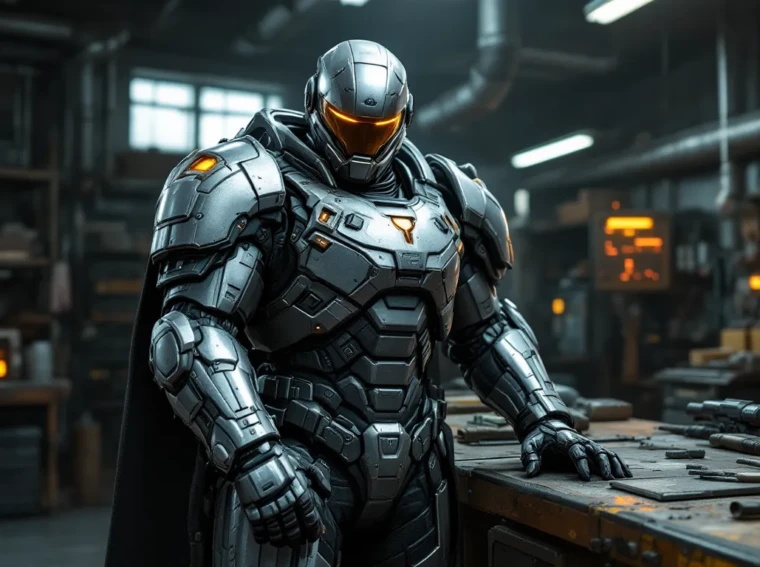
The Commonwealth is merciless. Between super mutants lobbing mini nukes, raider ambushes, and the occasional deathclaw deciding you look like lunch, staying alive in Fallout 4 means treating armor as more than just cosmetic. It’s the difference between tanking a behemoth’s swing and respawning at your last save. Whether you’re rolling through Concord in T-45 power armor or sneaking through the Glowing Sea in a maxed-out ballistic weave outfit, understanding fallout 4 armor mechanics separates wasteland survivors from corpses.
This guide breaks down everything you need to know about fallout 4 armor sets, from the nitty-gritty damage calculations to the legendary effects worth farming. We’ll cover power armor models, regular armor combinations, unique pieces, and optimal builds for stealth, tank, and VATS playstyles. By the end, you’ll know exactly which fallout 4 clothes can be upgraded, where to find the best gear, and how to maximize protection without sacrificing mobility or perks.
Key Takeaways
- Fallout 4 armor mechanics use diminishing returns on damage resistance—stacking past 500–600 DR provides marginal gains, so balance all three resistance types (DR, ER, and RR) for comprehensive protection.
- Ballistic weave clothing, unlocked through the Railroad faction, allows you to layer protection by adding up to 110 DR/ER to compatible outfits, rivaling low-tier power armor without sacrificing stealth.
- Power armor frames scale with your level, and X-01 is the best vanilla option with ~630 DR and 450 ER fully upgraded, but T-51 and T-60 offer solid mid-game alternatives with lower repair costs.
- Legendary armor effects like Sentinel’s (15% damage reduction while standing, stackable to 75%) and Cavalier’s (15% reduction while sprinting) are build-defining and worth farming despite the tedious reload strategy.
- Marine Armor from the Far Harbor DLC provides ~158 DR/ER fully upgraded—the highest for non-power builds—and maintains stealth viability while accepting all standard mods.
- Synergizing fallout 4 armor choices with perks like Toughness, Rooted, and Ninja is more impactful than raw numbers; a tank build without defensive perks is only half-optimized, regardless of gear quality.
Understanding Armor Mechanics in Fallout 4
Before hunting down legendary pieces or grinding for materials, you need to understand how protection actually works. Fallout 4’s armor system isn’t just about stacking numbers, it’s about balancing three resistance types and understanding diminishing returns.
Damage Resistance vs. Energy Resistance
Damage Resistance (DR) protects against physical attacks: bullets, melee weapons, explosions. Energy Resistance (ER) handles lasers, plasma, radiation-based energy damage. Both use the same formula, but they’re calculated separately based on incoming damage type.
Here’s the catch: resistance has diminishing returns. The formula is Damage Reduction % = (Resistance / (Resistance + 350)) × 100. At 100 DR, you’re reducing physical damage by about 22%. At 350 DR, you hit 50% reduction. At 700 DR, you’re only at 66%. Stacking past 500-600 gives marginal gains unless you’re min-maxing a tank build.
Most players balance both resistances. Energy weapons become more common as you progress, especially against Institute synths and Automatron robots. Ignoring ER means getting melted by laser rifles in late-game encounters.
How Radiation Resistance Works
Radiation Resistance (RR) reduces rad accumulation from environmental sources, weapon attacks, and food. Unlike DR/ER, RR uses a simpler percentage reduction: 50 RR = 50% less rads per tick.
Power armor provides inherent rad resistance, making it the go-to for Glowing Sea exploration or battling Children of Atom fanatics. Regular armor requires dedicated pieces or perks like Rad Resistant to hit meaningful numbers. Hazmat suits offer 1000 RR but zero DR/ER, making them situational at best.
For most builds, 200-300 RR covers casual wasteland travel. Anything higher is overkill unless you’re farming irradiated zones without power armor.
The Role of Ballistic Weave
Ballistic Weave is the game-changer for non-power armor builds. Unlocked through the Railroad questline, it lets you upgrade certain fallout 4 clothes with ridiculous DR/ER bonuses. Mk5 weave adds 110 DR and 110 ER to compatible outfits and hats, more protection than most armor pieces.
The beauty of ballistic weave is layering. You can wear a woven outfit under armor pieces, stacking resistances to rival low-tier power armor. A Mk5 Army Fatigues + full combat armor set pushes 300+ resistances without touching power armor.
Not all clothing accepts weave, though. Vault suits, some dresses, and faction outfits are incompatible. We’ll cover the best candidates later, but this mechanic alone makes Railroad quests worth prioritizing early.
Power Armor: Your Mobile Fortress
Power armor isn’t just protection, it’s a statement. Nothing says “Commonwealth ownership” like stomping through downtown Boston in X-01 plating while raiders bounce shots off your chest. But power armor comes with trade-offs: fusion core dependency, repair costs, and reduced sneak effectiveness.
Finding and Collecting Power Armor Sets
Power armor frames spawn at fixed locations, but the armor pieces attached scale with your level. Hit the same spot at level 10 vs. level 30, and you’ll find T-45 vs. X-01 parts.
Key early-game frames:
- Concord (Rooftop, Museum of Freedom): Your first set, guaranteed T-45 pieces. Grab it during “When Freedom Calls.”
- Robotics Disposal Ground: South of Sanctuary, easy early grab. Usually Raider power armor at low levels.
- Lexington (Corvega Assembly Plant Roof): Requires jetpack or creative platforming, but accessible early.
- Federal Ration Stockpile: South of Diamond City, often overlooked.
Late-game farming spots:
- Court 35: Always spawns a full set, scales to your level. T-60 or X-01 at higher levels.
- South Boston Military Checkpoint: Locked behind Master terminal, usually T-60.
- Abandoned Shack (Far Harbor DLC): Guaranteed X-01 if you’re level 28+.
Don’t sleep on purchased frames from vendors. Atom Cats Garage sells T-60 pieces, and Rowdy at the Atom Cats can paint your armor for stat bonuses.
Power Armor Models Ranked From Worst to Best
7. Raider Power Armor: Trash-tier. Low resistances, looks like a junk sculpture. Only use if you’re roleplaying a raider or desperate at level 5.
6. T-45 Power Armor: Your starter set. Serviceable early but outclassed fast. DR caps around 480 fully upgraded. Fusion cores drain faster than later models.
5. T-51 Power Armor: The Commonwealth standard. Balanced resistances, decent radiation protection. Fully modded T-51 hits ~560 DR and 340 ER. Solid mid-game choice.
4. T-60 Power Armor: Brotherhood standard issue. Slight upgrade over T-51, with ~570 DR and 380 ER maxed out. More common than X-01 but less prestigious. BOS paint variants add minor bonuses.
3. X-01 Power Armor: Pre-war prototype, peak vanilla protection. Maxed X-01 pushes ~630 DR and 450 ER. Expensive to repair (requires nuclear material), but worth it for endgame tank builds.
2. Quantum X-01 (Nuka-World DLC): X-01 but cooler. Glowing blue paint isn’t just cosmetic, using Nuka-Cola Quantum triggers explosive AoE damage. Same resistances as standard X-01 but with style points.
1. T-65 Power Armor (Modded/Creation Club): If you’re running mods or Creation Club content, T-65 is king. Pushes ~700+ DR with proper mods, making you nearly invincible.
Upgrading and Modifying Power Armor
Raw frames mean nothing without mods. Each piece (helmet, torso, arms, legs) has multiple upgrade tiers requiring Armorer and Science. perks.
Essential mods:
- Torso: Jetpack (Science. 4, Armorer 4): Mobility game-changer. Vertical combat, rooftop access, escape routes. Non-negotiable for serious builds.
- Legs: Calibrated Shocks (Science. 1, Armorer 4): +50 carry weight per leg. +100 total lets you hoard junk without fast travel penalties.
- Arms: Hydraulic Bracers (Armorer 2): +2 Strength for melee/carry weight. Optimum Bracers (Armorer 3) boost melee damage significantly.
- Helmet: Targeting HUD (Science. 3): Highlights living targets and shows their health bars. Critical for VATS builds or high-difficulty runs.
Paint jobs aren’t just cosmetic. BOS paint variants (BOS Knight, Paladin, Elder) provide minor DR boosts. Hot Rod paint (Atom Cats) adds Agility bonuses. Far Harbor’s Vim. paint gives unique bonuses.
Fusion core economy matters. Each core lasts 20 real-time minutes of use (longer with Nuclear Physicist perk). Late game, cores are abundant, Prydwen vendors sell them, and you’ll find dozens scavenging. Early game, use power armor sparingly or invest in the perk.
Best Regular Armor Sets and Combinations
Not everyone wants to stomp around in a fusion-powered tank. Regular fallout 4 armors offer flexibility: no core dependency, better stealth, and compatibility with ballistic weave clothing. The trade-off is lower raw resistances and more micromanagement.
Combat Armor and Where to Find It
Combat Armor is the Commonwealth standard for non-powered protection. It comes in three variants: standard, Sturdy, and Heavy. Heavy Combat Armor offers the best base resistances, with a full set providing ~140 DR and ~140 ER before mods.
Finding Heavy Combat Armor requires level scaling (usually 20+) and some luck. Best farming spots:
- Gunners Plaza: Gunner commanders drop Heavy pieces reliably.
- Quincy Ruins: Clint, the Gunner leader, often wears full Heavy Combat.
- National Guard Training Yard: Feral ghouls and locked armory, worth the risk.
- Vendors: KL-E-0 in Goodneighbor and Alexis Combes at Vault 81 occasionally stock pieces.
Modding combat armor requires Armorer perks and materials. Prioritize:
- BOS Mod (Armorer 4): Adds DR, ER, and significant RR to each piece. Best all-around upgrade.
- Polymer Mod (Science. 1, Armorer 3): Lightweight, boosts stealth slightly. Good for agility builds.
- Shadowed Mod (Armorer 3): Stealth bonus, essential for sneaky characters.
Combat armor is modular, mix and match pieces for style or balance resistances as needed.
Synth and Heavy Synth Armor
Synth Armor is the Institute’s answer to combat armor, with slightly higher ER than DR. Heavy Synth Armor provides ~110 DR and ~120 ER per full set, making it superior against energy weapons but weaker against ballistic damage.
Synth armor only drops from Institute synths or allied coursers. You won’t find it in the wild until you progress the main story. Best farming:
- Institute itself: Post-Teleportation, synth patrols respawn. Kill, loot, repeat.
- Random encounters: Synth strike teams drop pieces occasionally.
- Coursers: Rare spawns, but they sometimes carry synth armor pieces.
For players following the Institute storyline or engaging coursers, synth armor becomes plentiful mid-to-late game. It’s aesthetically cleaner than combat armor, white plating with minimal bulk. Mods are similar: Polymer, Sleek (ER boost), or Shadowed.
Marine Armor and Far Harbor DLC
Marine Armor is the DLC powerhouse. Exclusive to Far Harbor, it surpasses both combat and synth armor in raw stats. A full Marine set provides ~158 DR and ~158 ER fully upgraded, closing the gap with low-tier power armor while maintaining stealth viability.
Acquiring Marine Armor requires Far Harbor DLC and some legwork:
- DiMA’s Cache: During “The Way Life Should Be” quest, you can access a full set of Marine Armor in Acadia.
- Shipbreaker Quest: Rewards a unique Marine helmet.
- Random Spawns: After reaching Far Harbor, Marine armor pieces drop from high-level enemies on the island.
Marine armor accepts all standard mods (Shadowed, Polymer, BOS-style upgrades). Its balanced resistances and rad protection make it the endgame choice for non-power builds. Downside? It’s DLC-locked, so base-game players can’t access it.
Unique and Legendary Armor Pieces Worth Hunting
Legendary armor effects turn good protection into game-breaking loadouts. While you can farm random legendaries from enemies, certain unique pieces offer guaranteed effects worth building around.
Top unique armor pieces:
- Grognak Costume (Hubris Comics): +2 Strength, +1 Endurance. Can’t be armored, but stacks with ballistic weave headwear and certain mods. Great for melee builds.
- Destroyer’s Armor (Far Harbor, Shipbreaker Quest): Legendary Marine chest with 15% reduced damage from robots. Essential for Automatron or Institute runs.
- Acadia’s Shield (Far Harbor): Legendary Marine leg piece with 15% reduced damage from mirelurks. Niche but helpful on Far Harbor island.
- Sergeant Ash’s Power Armor (National Guard Depot): Full T-60 set with unique paint. Same stats as regular T-60, but looks distinct.
- Rescue Diver Suit (Far Harbor): Provides underwater breathing and decent RR. Situational, but invaluable for underwater locations.
The real treasure is legendary farming. Legendary enemies scale with difficulty and level, dropping randomized gear. Certain effects break the game when stacked across five armor pieces.
Best Legendary Armor Effects
Not all legendary effects are equal. Some are build-defining: others are vendor trash. When discussing armor optimization strategies and meta builds, these effects consistently top the list:
S-Tier (Build-Defining):
- Sentinel’s: 15% reduced damage while standing still. Stack five pieces for 75% reduction. Turns you into an immovable tank. Combine with VATS or heavy weapons for ridiculous survivability.
- Cavalier’s: 15% reduced damage while sprinting. Five pieces = 75% reduction while moving. Opposite of Sentinel’s but equally broken for aggressive builds.
- Assassin’s: 10% reduced damage from humans per piece. 50% total with five pieces. Incredible for Nuka-World, raider-heavy areas, and PvP survival mode.
A-Tier (Powerful):
- Bolstering: Up to +35 DR/ER when low health. Synergizes with Nerd Rage perk for glass cannon builds. Five pieces can add 175 resistances when you’re critical, clutch or suicide depending on playstyle.
- Chameleon: Turns you invisible when crouched and stationary. One piece is enough: effect doesn’t stack. Mandatory for stealth builds.
- Vanguard’s: Up to +35 DR/ER when high health. Opposite of Bolstering. Safe, consistent tankiness for players who stay topped off.
B-Tier (Situational):
- Lifesaving: Auto-stim when health drops below 10%, once per minute. Get-out-of-jail card, but unreliable. One piece is fine: more is redundant.
- Troubleshooter’s: 15% reduced damage from robots. Amazing for Automatron DLC or Institute fights, useless otherwise.
- Ghoul Slayer’s / Mutant Slayer’s: 15% reduction from ghouls/super mutants. Decent for specific zones (Glowing Sea, Quincy), but too niche for general use.
C-Tier (Vendor Fodder):
- Exterminator’s: 15% reduction from mirelurks and bugs. Almost never relevant.
- Hunter’s / Zealot’s: Same as above, for animals and robots. Niche to the point of uselessness.
- Weightless: Armor weighs nothing. Cute, but carry weight perks and Strength investment make this pointless.
Farming strategy: Hit legendary hotspots like Quincy Ruins, National Guard Training Yard, and Gunners Plaza on higher difficulties. Survival mode boosts legendary spawn rates. Save before engaging, reload if the effect is trash. It’s tedious, but a full Sentinel’s or Cavalier’s set trivializes endgame content.
Clothing That Can Be Armored
Here’s where Fallout 4’s armor system gets creative. Most clothing blocks armor pieces, wear a dress, lose your chest slot. But certain outfits allow armor layering, and a select few can be upgraded with ballistic weave for absurd defense stacking.
How to Unlock Ballistic Weave
Ballistic weave is gated behind the Railroad faction. Here’s the unlock path:
- Join the Railroad: Complete “Road to Freedom” by following the Freedom Trail to the Old North Church.
- Finish “Tradecraft”: First Railroad mission with Deacon. Unlocks initial Railroad quests.
- Complete one Jackpot mission: PAM assigns these randomly. “Jackpot: [Location]” quests involve clearing caches or defending drops. Finish one.
- Talk to Tinker Tom: After Jackpot, Tom will mention “special projects.” He’ll now offer ballistic weave upgrades at his armor bench.
Mk1 weave is available immediately. Higher tiers require Armorer perks:
- Mk3: Armorer 3 (+65 DR/ER)
- Mk4: Armorer 4 (+90 DR/ER)
- Mk5: Armorer 4 (+110 DR/ER)
Invest in Armorer if you’re going non-power armor. Mk5 weave is endgame-viable.
Best Outfits to Upgrade With Ballistic Weave
Not all clothing accepts weave. Vault suits, most dresses, and faction-specific armor (BOS uniform, Institute jumper) are incompatible. The best candidates allow armor layering and ballistic weave.
Top-Tier Weave Candidates (Allow Armor Pieces):
- Army Fatigues: Found at military checkpoints, Ranger Cabin, or bought from vendors. Allows all five armor slots. Mk5 weave adds 110/110 resistances before armor. Best-in-slot for layered builds.
- Baseball Uniform: Dropped by Diamond City guards or found in dugouts. Same layering as Army Fatigues, slightly harder to find.
- Military Fatigues: Similar to Army Fatigues, slightly different appearance. Functionally identical.
- Minutemen Outfit: Given during “When Freedom Calls.” Allows full armor layering. If you’re pro-Minutemen, this is aesthetically on-brand.
Good Weave Options (No Armor Layering):
- Tuxedo / Fancy Outfit: Can’t wear armor, but Mk5 weave gives 110/110 resistances with Charisma bonuses. Decent for non-combat diplomacy builds.
- Laundered Green Shirt and Combat Boots: Allows some armor pieces (limbs only). Decent hybrid option.
- Reginald’s Suit: Unique suit with +2 Charisma. Ballistic weave compatible, but blocks chest armor.
Hats and Headwear:
Some hats accept ballistic weave separately:
- Newsboy Cap: +1 Agility, Mk5 weave adds 110/110. Solid stealth option.
- Trilby Hat: +1 Charisma. Weave-compatible, good for speech checks.
- Fedora / Battered Fedora: Fashion + protection. Indiana Jones cosplay viable.
Combine a woven Army Fatigues with full Heavy Combat Armor (BOS modded) and a woven Newsboy Cap, and you’re sitting at 350+ DR/ER without power armor. Add legendary effects, and you rival X-01 plating. For those exploring diverse gear customization options, ballistic weave layering opens creative builds impossible with power armor alone.
Optimal Armor Builds for Different Playstyles
Your armor should complement your build, not contradict it. A stealth sniper in clunky power armor is wasting potential, and a melee berserker in shadowed leather is asking for a dirt nap. Here’s how to optimize gear for the three dominant playstyles.
Stealth Build Armor Setup
Stealth builds prioritize Agility bonuses, sneak multipliers, and minimal detection. Power armor is counterproductive, its footsteps and lack of sneak bonuses blow cover.
Optimal Gear:
- Armor: Shadowed Heavy Combat Armor or Shadowed Marine Armor (if you have Far Harbor). Shadowed mods reduce detection significantly.
- Underclothing: Ballistic-weave Mk5 Army Fatigues. Wear under armor for layered resistances.
- Headwear: Ballistic-weave Mk5 Newsboy Cap (+1 Agility).
- Legendary Effects: Chameleon on one piece (mandatory for invisibility). Fill remaining slots with Agility-boosting pieces (+1 or +2 Agility each) or Shadowed legendary armor for extra sneak bonuses.
Perks to Complement:
- Sneak (Agility 3): Maxed for 50% harder detection.
- Ninja (Agility 7): 10x sneak attack damage with ranged, 3.5x melee.
- Mister Sandman (Agility 4): Silenced weapon damage bonuses.
Playstyle Notes:
Avoid sprinting near enemies, even Chameleon breaks if you move too fast. Use silenced weapons (modded hunting rifles or deliverer pistol). Stay in shadows, abuse high ground, and retreat if detected. With full shadowed armor and Chameleon, enemies walk past you at point-blank range.
Tank Build Armor Setup
Tank builds soak damage, wade into crowds, and laugh off mini nukes. Power armor or legendary-stacked regular armor both work, choose based on fusion core availability.
Power Armor Tank:
- Frame: X-01 or T-51 fully upgraded with BOS mods.
- Torso Mod: Jetpack for mobility or Core Assembly (fusion cores last longer).
- Leg Mods: Calibrated Shocks for carry weight.
- Helmet Mod: Targeting HUD for VATS accuracy.
- Paint: BOS Elder or Vim. Paint for minor DR boosts.
Regular Armor Tank:
- Armor: Full Heavy Marine Armor (Far Harbor) or Heavy Combat Armor with BOS mods.
- Underclothing: Ballistic-weave Mk5 Army Fatigues.
- Legendary Effects: Sentinel’s on all five pieces (75% damage reduction while standing). If Sentinel’s is unobtainable, stack Vanguard’s for raw resistances.
Perks to Complement:
- Toughness (Endurance 1): +50 DR at max rank.
- Rooted (Strength 9): +50 DR when standing still (stacks with Sentinel’s).
- Lifegiver (Endurance 3): +60 HP at max rank.
- Adamantium Skeleton (Endurance 10): Limb damage immunity.
Playstyle Notes:
Tanks stand still and trade blows. Use heavy weapons (Gatling Laser, Minigun) or high-DPS automatics. Sentinel’s armor means you facetank while VATS or hip-firing. In power armor, jetpack lets you reposition without sprinting. Carry dozens of stimpaks, you’ll burn through them on Survival.
VATS and Critical Build Armor Setup
VATS builds rely on Luck, Perception, and AP management. Armor should boost critical chance, AP pool, and AP refresh without sacrificing too much protection.
Optimal Gear:
- Armor: Light Combat Armor or Synth Armor (lighter = faster AP refresh). Polymer mods for weight reduction.
- Underclothing: Ballistic-weave Mk5 Army Fatigues or Minutemen Outfit.
- Headwear: Perception-boosting hat (e.g., Patrolman Sunglasses under a woven hat for stacking).
- Legendary Effects: Powered (+1 AP refresh per piece, stacks to insane AP regen). Alternatively, Lucky (increased critical chance per piece).
Perks to Complement:
- Critical Banker (Luck 7): Store multiple criticals.
- Better Criticals (Luck 6): +50% crit damage.
- Four Leaf Clover (Luck 9): Critical hits fill meter faster.
- Grim Reaper’s Sprint (Luck 8): Kills restore AP.
Playstyle Notes:
VATS builds burn AP fast. Five Powered armor pieces mean near-instant AP recovery between engagements. Use high-crit weapons like Righteous Authority (laser rifle with double crit damage) or Deliverer (pistol, crits fill faster). For those fine-tuning their build synergies with perk optimization, VATS setups reward careful planning and legendary farming.
With maxed Luck and the right armor, you crit every other VATS shot, chain-killing entire raider camps before your AP depletes.
Tips for Maximizing Your Armor Effectiveness
Even the best gear is wasted if you mismanage it. Here’s how to squeeze every advantage from your armor setup.
Repair Kits and Material Hoarding:
Armor degrades, especially on Survival. Stock adhesive (vegetable starch from Sanctuary farms), aluminum, and fiber optics. Power armor repair requires rare materials, nuclear material for X-01, circuitry for T-60. Build scavenging stations in settlements and equip settlers with resource-generation gear.
Layer Your Resistances:
Don’t just chase DR. Balance DR, ER, and RR. Late-game threats mix damage types, Institute synths fire lasers while Gunners use ballistics. A Marine Armor + Mk5 Army Fatigues combo gives 270+ balanced resistances, enough to handle most encounters without swapping.
Use Chems and Food Buffs:
Med-X adds 25 DR for 4 minutes. Psycho boosts damage but also adds DR with certain mods. Grilled Radroach gives +25 HP, and Deathclaw Steak adds +5 Strength and DR. Stack these before tough fights. Chemist perk (Intelligence 7) doubles duration.
Match Armor to Enemy Types:
Swap gear for specific encounters. Facing Institute synths in mass? Prioritize ER and Troubleshooter’s pieces. Clearing Quincy’s Gunners? DR and Assassin’s armor. Keep a few specialized sets at home base for mission prep.
Don’t Neglect Power Armor Cores:
If you’re running power armor full-time, invest in Nuclear Physicist (Intelligence 9). Rank 3 makes cores last 100% longer and adds +25% fusion core damage (for Gatling Laser users). Cores become essentially unlimited past level 30 if you loot regularly.
Scavenge Regularly:
Legendary armor doesn’t drop from story missions, it comes from random encounters and enemy spawns. Farm high-level zones like Gunners Plaza, Quincy Ruins, and National Guard Training Yard. Save before engaging legendaries: reload if the drop is trash. It’s tedious but necessary for god-tier rolls.
Combine Armor With Perks:
Armor is half the equation. Toughness (Endurance 1), Moving Target (Agility 6), and Rooted (Strength 9) add defensive layers no armor can provide. A 500 DR tank with Rooted + Sentinel’s armor takes virtually no damage standing still. When evaluating effective defensive strategies for challenging content, the synergy between gear and perks often matters more than raw numbers.
Avoid Overkill on Resistances:
Diminishing returns hit hard past 600 resistances. If you’re already at 500+ DR/ER, invest in legendary effects like Sentinel’s or AP regeneration instead of stacking more raw defense. You’ll gain more survivability from multipliers than another 50 DR.
Keep a Backup Set:
Power armor breaks mid-fight. Regular armor degrades. Keep a secondary set at home base. Nothing’s worse than losing your X-01 helmet to a Behemoth and scrambling for replacements.
Use Companion Perks:
Companions like Hancock (Isodoped perk: +20% crit damage) and Paladin Danse (Know Your Enemy: +20% damage to synths, super mutants, ghouls) stack with armor builds. MacCready (Killshot perk: +20% headshot accuracy) synergizes with VATS builds. Choose companions that amplify your gear’s strengths.
Conclusion
Armor in Fallout 4 is more than stat padding, it’s the foundation of every build. Whether you’re stomping through the Glowing Sea in X-01, ghosting through the Combat Zone in shadowed Marine Armor, or facetanking Quincy with a full Sentinel’s set, your gear defines your survival.
Power armor offers raw protection and intimidation but chains you to fusion cores. Regular armor with ballistic weave rivals low-tier power armor while maintaining mobility and stealth. Legendary farming is a grind, but Sentinel’s, Cavalier’s, or Powered effects turn good builds into unstoppable ones.
Don’t neglect the fundamentals: balance DR/ER/RR, layer your clothing with armor, and match your gear to your playstyle. A stealth sniper in power armor is wasted potential. A tank without Toughness perks is half-built. Synergy between armor, perks, and weapons is what separates wasteland legends from corpses in Concord.
The Commonwealth doesn’t care about your intentions, it cares if you can take a hit and keep moving. Build smart, farm hard, and let your armor do the talking.