
Buzz in the sports world has been a constant vector of this phenomenon. Change, improvement, degradation, and intrigue are undeniable when we analyze such a general subject.
Not all years need to be transformative. Some are the definition of stagnation, while others merely provide expected evolution and carryover. That’s why 2026 feels like a special year.
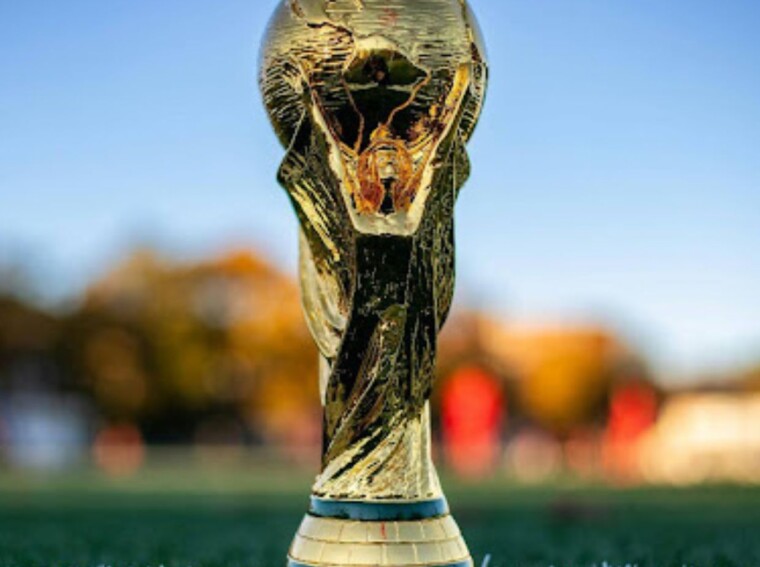
Much of the world is rejoicing because the 2026 FIFA World Cup will be happening close to four years after the last one. Moreover, the Milano-Cortina Olympic Games provide a new look into the fascinating, globally involved sector of winter sports.
These are events that don’t happen that often and that create an increased volume of drive and enthusiasm.
However, sports are more than just the games, discipline, and preparation. They’re a living, ever-shifting stratosphere that will always involve much more than the actual events. All the involved facets will chime in and have something to say.
In this article, we will discuss the trends that are both trackable and somewhat theoretical. We’ll talk about the performance, production, consumption, and perception of sports.
Come read what you can expect from the sports environment of 2026!
What Are We Referring To When We Talk About The Sports World?
The sports world is, in our definition, the system that involves the sporting dimension, its business capitalization, and how fans consume and follow the product.
- Finances support the propagation of sports. They also support its improvement, or cause its downfall or involution.
Investment bankrolls performance by creating a system that supports athletes with the necessary resources, leading to clear improvement.
- However, business interests can also lead to the dilution of the sporting product. They can also ruin, especially in cases of crass financial mismanagement.
For certain sports to be financially viable, they also need to attract fans, who are the core drivers in the sports world.
- There is no revenue and no business without the money that comes from fans. Its popularity among audiences brings sponsorships and broadcast deals. Fans have an interest in a sport only if the product itself is viable.
This means enjoying what they see, but also having the opportunity to easily access a qualitative way to watch.
- Nowadays, interactivity is part of the process. Data sourced from betonvalue highlights an increased presence of online sports betting, but also the arena of predictions and opinions.
This can only prove that fan experiences and demands are changing, which impacts everything else. What we end up with is an interconnected web of forces that revolve around the idea of sports.
How are things about to change in 2026?
Viewership Consumption: New And Modified Models All Across The Board
Many are looking at the streaming wars as a direct segue toward a better product. The conclusion is very arguable, but the process is fascinating.

In fact, many major sports have their own strategies that aim to enhance accessibility and boost revenue. After all, club evaluations depend on factors like home market, international appeal, and the ability to leverage their branding.
There are some days that we have already witnessed, but also cases that are a bit up in the air. Here are some major examples of this reality:
- The NFL has already made a major move in 2025. The sale of the NFL Network to Disney’s ESPN subsidiary is starting to cause ripples for fans/consumers.
In 2026, these effects boil down to the integration of its shows and sports products into ESPN’s direct-to-consumer streaming service.
The NFL also gained equity in this deal, which has raised questions about journalistic integrity.
- The NBA is moving toward a model that will focus on local media rights. If you’re unaware, every NBA franchise has its own separate deal that is adjusted for its own market.
This new development that is shaping up for the 2026 negotiations revolves around bundle deals for local media deals that would aggregate circa 20 teams per package.
- The UFC, a premier combat sports name, is readying a stratospheric change: moving away from the pay-per-view model. A data-driven study on internet piracy shows that this phenomenon is only increasing.
As a result, TKO Group Holdings will enter a partnership with Paramount Skydance Corporation. It will bring its events to a streaming service via an annual subscription and the occasional freebie on CBS.
- Formula 1 is entering a highly lucrative partnership with Apple. Per Ian Holmes, F1’s Chief Media Rights and Broadcast Officer, this process will embed the apex motorsport commercial entity within the tech giant’s growing system.
It will yield major numbers, with a reported $140 million per year. The direct result is that F1 will stop selling F1 TV in the USA. The product will move into Apple TV and its offering.
The Gambling Revolution Plotline Keeps Thickening
This is a major subject that, in fairness, could’ve yielded separate analysis.
Gambling has risen beyond the normal, symbiotic relationship with sports. Its current status showcases that fan experiences are unavoidably tied with betting across numerous markets, beyond the USA. This is why we see more and more markets warming up to legalizing it.
Previously, we could’ve just talked about the ascension of major bookmakers in certain key jurisdictions. In America, we’ve had DraftKings and FanDuel, which have been the traditionally dominating force.
What has changed is the increased integration of the blockchain, which has led to the rise of prediction markets. These are platforms that have directly created a model in which every single outcome and possibility can become a source of prediction and monetization.
The doublet of Kalshi and Polymarket, along with other solutions that are trying to capitalize on this model, is stirring up many reactions.
Massachusetts’ legal action against Kalshi, coupled with Nevada’s NGCB vs Polymarket, tries to keep these prediction platforms within gambling regulations.
In many ways, 2026 is shaping up to be a year of reckoning on a global stage. Countries are increasingly adept at banning prediction markets, which can lead to some interesting movements.
Major Sports Science Shifts Try To Enhance Performance
According to a researched study on the sports analytics market, this sector is moving from niche to increasingly mainstream. It forecasts a CAGR of 18.5% from 2026 to 2033, which is an incredibly rapid rate.
Sports clubs that can afford to invest in sports science solutions are looking for efficiency. Their commercial viability and pursuit of the ultimate level of performance are key motivators. Using advanced metrics to identify the edge is very valuable.
The usage of such resources is nothing new.
However, there’s a reason why the aforementioned study begins its estimations with 2026. The adoption rate is rising rapidly. Smaller clubs are adept at implementing sports science to bridge the gap to the big-money giants and set themselves up for success in the long run.
Meanwhile, major franchises are trying to cut up their excess spending and chase better commercial stability by investing smarter. Their efforts also help the on-field product.
Winning is everything, and continuous success rakes in the most fans, the biggest sponsorships, and the best-developed legacies.
Sports science can help tremendously, especially given the integration of AI in these analytics.
Private Equity Keeps Boosting The Numbers
Beyond the state sovereign funds that start leaving their footprints on numerous ownership structures around the sports world, private equity is corporatizing this field.

Previously, major ownership models included state or local running and bankrolling. As we said, we still have such vestiges. Then, we had the mercurial and providential owners of old, resting the financial fate of a club on the wealth of a single person (or family).
Now, we have an increased presence of private equity firms that do one thing: invest in assets and sell them for a profit. For sports clubs and other similar entities, these funds are much-needed resources that can help them in a financial arms race.
There are many examples to speak of, but some of the most interesting ones are new to 2026.
We have the Otro Capital-University of Utah deal, valued at $500 million, while the Big 12 Conference in college gridiron football enters a partnership of sorts with RedBird Capital and Weatherford Capital. This is, essentially, a credit deal with very favorable rates (reported below 10%)
In Europe, there are many cases of clubs being taken over by such private equity firms, including Chelsea’s acquisition by Clearlake Capital and AC Milan’s takeover by RedBird.
What we can see is increasingly eager suits who are readying up the private equity money under their care. Sports clubs and their commercial potential are targets that showcase enough upside to attract such investments going forward.
The 2026 FIFA Men’s World Cup Comes With Questions And Promises
As we’ve stated, this year is about to unleash the beloved and globally relevant FIFA World Cup, having its 2026 edition as a slight reconfiguration of its model.
Namely, the North America-bound World Cup has expanded its structure to 48 participants. It’s an opportunity to attract massive audiences beyond the onlookers whose nations are not in the final dance.
For the USA, it’s also an opportunity to test the country’s attraction toward this sport.
After billion-dollar deals, MLS franchise evaluations, and increased expectations regarding fan engagement, 2026 is the year for America to evaluate its relationship with association football.
The USA has always been the market to aspire to for any international commercial entity. Soccer, as the locals call it, has great competition from domestic sports, and now it can show where it truly stands.
Conclusion
We have an immense number of interesting developments that we could’ve mentioned.
Women’s sports are, seemingly, at a crossroads now that evaluations and salary demands are starting to move more and more in lockstep. This is a reality that still needs clarity, but also an article of its own.
We could’ve also delved more into the multifaceted introduction of AI in the sports world, especially given the mass access to such models. Once again, this would require an even more focused approach.
To truly conclude this piece, we need to remind you to consume sports carefully and responsibly. If you happen to be a betting person, we urge you to gamble responsibly!